




 International
  Argentina
  Australia
  Austria
  Belgium
  Brazil
  Canada
  Chile
Chile  Czechia
  Denmark
  Estonia
  Finland
  France
  Germany
  Greece
  Hungary
  India
India  Indonesia
  Ireland
  Israel
  Italy
Italy  Japan
Japan  Netherlands
  New Zealand
  Nigeria
  Norway
  Malaysia
  Mexico
  Peru
Peru  Philippines
  Poland
  Qatar
Qatar  Romania
  Russia
  Slovakia
  Slovenia
  South Africa
  South Korea
  Spain
Spain  Sweden
  Switzerland
  Thailand
  Turkey
  Vietnam
  UAE
UAE  United Kingdom
  USA
USA - Casino News
- Game Providers
- USA News
Austria’s Gambling Monopoly Faces Its Most Serious Challenge Yet


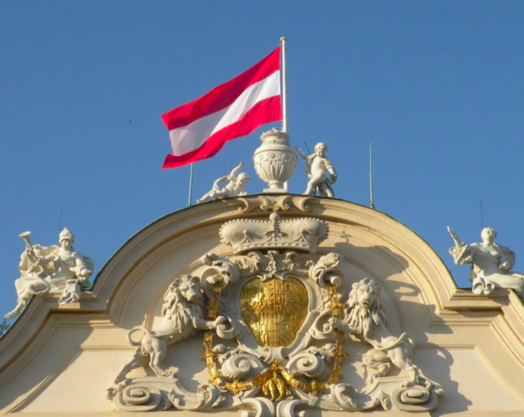
Monopoly Faces Imminent Overhaul
Austria’s long-standing resistance to gambling reform may be nearing an end. Industry officials and legal experts say the government is finally preparing to release long-delayed proposals that could dismantle the country’s single-licence model for online gambling. The Ministry of Finance is expected to publish draft reforms “any day now,” according to Simon Priglinger-Simader, president of the Austrian Betting and Gaming Association (OVWG). The draft will open formal negotiations between the coalition’s three parties: the Social Democrats (SPÖ), who control the ministry; the centre-right People’s Party (ÖVP); and the liberal NEOS.
At present, Austria allows only one licence for lotteries and all online gaming products. That 15-year permit, due to expire in 2027, is held by Win2day, a brand of Austrian Lotteries and a subsidiary of Casinos Austria. The same company also holds all 12 land-based casino licences. State holding company ÖBAG owns one-third of Casinos Austria, giving the government a direct financial stake in the monopoly.
Rumours of reform began when the three-party government took office in March. Its coalition agreement made a vague commitment to “further development” of the monopoly. Subsequent public comments by senior officials suggested growing support for an open licensing regime. Priglinger-Simader says political signals from all three parties point toward liberalisation. “We’re much closer to online gambling reform than we’ve ever been in Austria,” he said.
Tight Deadlines Ahead of 2027 Licence Expiry
The looming expiry of the existing licences adds urgency. Six of the 12 offline casino licences, in addition to the online licence, end in 2027. The remaining six expire in 2030. Because the tendering process typically takes two years, lawmakers have little time to set new rules. “Austria’s fiscal situation is deeply concerning,” said Arthur Stadler, a Vienna-based gaming law specialist. He expects the government to use licence fees and updated tax structures to help fill budget gaps.
The coalition has already raised online gambling tax rates from 40% to 45% and increased betting duties from 2% to 5%. Operators argue that such high rates risk weakening “channelisation,” the industry term for steering players toward regulated platforms. German research indicates that each percentage point of tax above 30% could move a similar share of players to the black market. Stadler notes that Austria’s own channelisation performance is already poor. Despite being the only licensed operator, Austrian Lotteries has not succeeded in pulling players away from unlicensed sites. Under EU law, monopolies must serve the public interest, meaning weak player protection and low channelisation can undermine the legal basis for exclusive rights.
Key Questions Still Unresolved
Even if Austria ends its monopoly, major questions remain:
- How many online licences will be available?
Officials say the number of licences will be part of ongoing negotiations. The government could set a fixed cap, follow Germany’s now-abandoned capped model, create an indirect cap through high compliance costs, or issue unlimited licences. - How far will player protection measures go?
Austria would need to build a modern regulatory framework largely from scratch. The coalition agreement includes commitments to crack down on unlicensed operators through IP-blocking and payment blocking. Stadler warns that these measures must be precise to comply with EU rules. - Will Austria create an independent gambling authority?
Industry groups have long argued for separating regulatory oversight from the Finance Ministry, which historically had ties to Casinos Austria. While the government has shifted ownership stakes to the Economics Ministry to reduce conflicts, establishing a full independent regulator could take years. Stakeholders expect this step may be delayed until after new licences are issued.
Legal challenges are likely once the tendering process begins. According to Austrian newspaper Der Standard, the government is considering extending existing licences for one year—pushing reforms into 2028—to prevent regulatory bottlenecks. This option is available under the current Gambling Act but is expected to face criticism from operators and potential scrutiny from EU courts.
We’re much closer to online gambling reform than we’ve ever been in Austria.
A Market on the Brink of Change
For more than a decade, Austria has faced EU litigation, political hesitation, and industry pressure over its restrictive online gambling framework. Previous efforts to open the market collapsed due to coalition disagreements.
This time, insiders believe momentum is different. A combination of political alignment, fiscal pressure, and the upcoming licence expiries has created conditions for the most serious reform effort in years. Whether Austria chooses a limited opening or a full liberalisation, the release of the Finance Ministry’s draft will mark a decisive moment. After years of resistance, one of Europe’s most closed online gambling markets finally appears poised for change.
The Hottest USA Casinos 2025


 Rated 92.98/100%
welcome bonus
300%/$1,500 + 100 Free Spins
30x wagering (Deposit & Bonus)

 Rated 91.12/100%
welcome bonus
250%/$1,500
40x wagering (Deposit Only)

 Rated 92.05/100%
welcome bonus
200%/$1000
1x wagering (Deposit & Bonus)
 Rated 92.97/100%
welcome bonus
500%/$2,500+ 150 Free Spins
30x wagering (Deposit & Bonus)
 Rated 92.12/100%
welcome bonus
100%/$1,000
25x wagering (Deposit Only)
 Rated 91.11/100%
welcome bonus
300%/$3,000
25x wagering (Deposit Only)
 Rated 92.56/100%
welcome bonus
400% Weekly Promotion
35x wagering (Deposit & Bonus)

 Rated 91.13/100%
welcome bonus
200%/$3,000 + 30 Free Spins
35x wagering (Deposit & Bonus)
 Rated 92.18/100%
welcome bonus
100 Free Spins

 Rated 90.96/100%
welcome bonus
200%/$2,000
40x wagering (Deposit & Bonus)