





 International
  Argentina
  Australia
  Austria
  Belgium
  Brazil
  Canada
  Chile
Chile  Czechia
  Denmark
  Estonia
  Finland
  France
  Germany
  Greece
  Hungary
  India
India  Indonesia
  Ireland
  Israel
  Italy
Italy  Japan
Japan  Netherlands
  New Zealand
  Nigeria
  Norway
  Malaysia
  Mexico
  Peru
Peru  Philippines
  Poland
  Qatar
Qatar  Romania
  Russia
  Slovakia
  Slovenia
  South Africa
  South Korea
  Spain
Spain  Sweden
  Switzerland
  Thailand
  Turkey
  Vietnam
  UAE
UAE  United Kingdom
  USA
USA - Casino News
- Game Providers
- USA News
Montana Tightens Grip on Illegal Online Gambling


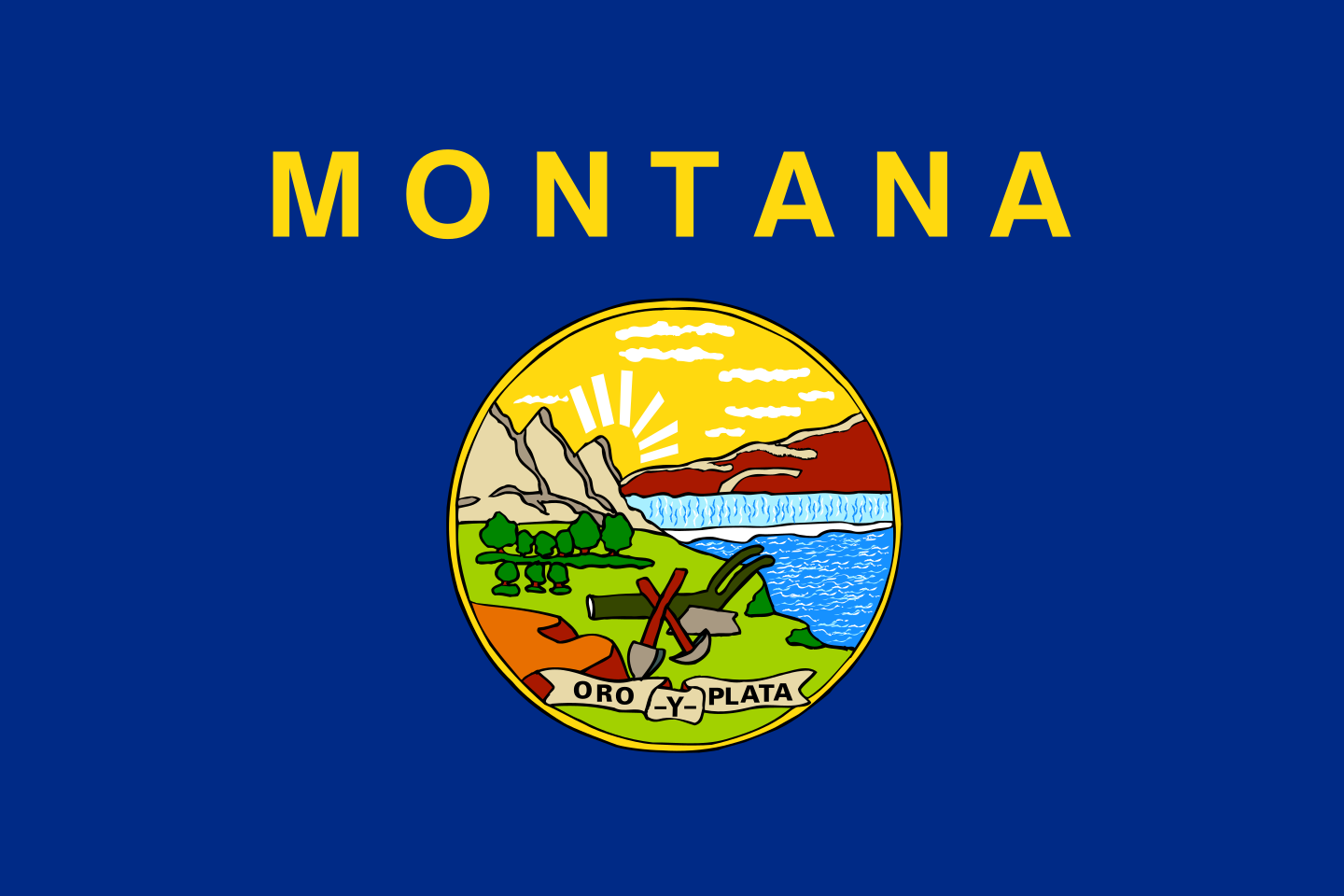
Enforcement partnerships signal new era
Montana has moved from legislation to enforcement, deploying data analytics and market intelligence tools to back up its sweeping online gambling prohibition — and the industry is watching closely.
In early March 2026, the Montana Department of Justice confirmed a formal agreement with Gaming Compliance International, a specialist compliance technology firm, marking a significant escalation in the state's effort to police its newly drawn iGaming boundaries. The partnership, executed through the DOJ's Gambling Control Division, hands regulators access to advanced monitoring tools designed to identify unlicensed operators, track black-market advertising, and map possible links between licensed gambling businesses and unregulated online platforms.
A ban that reshaped the national conversation
Montana became the first US state to enact a comprehensive prohibition on both online casinos and sweepstakes gaming under a single piece of legislation. Senate Bill 555, introduced by Senator Vince Ricci and signed by Governor Greg Gianforte in May 2025, took effect on October 1 of that year. The law expanded the definition of internet gambling to encompass virtually all forms of online wagering — platforms that transmit gambling information, accept wagers in any currency including cryptocurrency, or issue payouts of any kind. The only exemptions preserved were the state lottery, licensed simulcast racing facilities, and advance deposit wagering.
The legislation drew immediate national attention. The Social and Promotional Games Association criticized the bill's broad language, arguing it conflated legitimate free-to-play promotional platforms with real-money gambling operations. Legal observers noted that the law's reference to cryptocurrency as a medium of exchange was also unprecedented in state-level gambling statutes, effectively signalling that Montana viewed digital assets as a potential regulatory loophole requiring explicit closure. For operators with any exposure to Montana residents, the message was unambiguous.
Violations under the new law are treated as felonies, with penalties including fines of up to $50,000, imprisonment of up to ten years, or both. Soliciting or advertising an illegal gambling enterprise carries a misdemeanour charge under separate provisions of the amended Montana Code Annotated. Convicted individuals additionally face revocation of all state-issued gambling licences and a permanent ban from obtaining future licences — a measure designed to ensure that enforcement carries long-term commercial consequences.
GCI partnership: what the deal actually delivers
The agreement with Gaming Compliance International formalises a capability gap that regulators acknowledged had widened since SB 555 passed. Identifying and dismantling illegal offshore operators is a meaningfully different task from licensing a video gambling machine or auditing a tavern-casino's financials. GCI brings a toolkit specifically designed for digital enforcement: automated auditing workflows, media and advertising monitoring, data collection pipelines, and investigative reporting infrastructure.
Matthew Holt, CEO of Gaming Compliance International, stated that the collaboration demonstrates how public-private partnerships can generate measurable results in addressing unregulated gaming markets. Alex Sterhan, Administrator of the Montana DOJ's Gambling Control Division, framed the agreement as a direct extension of the state's commitment to a fair and ethical gaming environment. The practical focus of the work will centre on mapping black-market activity across both online channels and traditional advertising, while also identifying any structural connections between licensed Montana operators and unlicensed digital platforms.
The three core objectives the GCI engagement is expected to address are:
- Identifying and cataloguing unlicensed online operators actively targeting Montana residents through digital and affiliate advertising channels.
- Detecting financial or operational links between state-licensed gambling businesses and unregulated online platforms.
- Reducing the time lag between the identification of illegal operations and the initiation of enforcement action through real-time data intelligence.
Montana's regulated market: what is actually at stake
The state's existing gambling economy is substantial, and protecting it from unlicensed digital competition is not merely a philosophical position — it is a fiscal one. Montana's Video Gambling Machine sector remains the dominant revenue driver, with more than 16,000 machines operating statewide across licensed tavern-casino venues. Operators in this segment pay a 15 percent tax on gross gaming revenue, and the collective scale of the VGM market makes it one of the most significant per-capita gambling ecosystems in the western United States.
Sports betting through the state-controlled Sports Bet Montana platform recorded an annual handle of approximately $66.5 million in 2024, representing a seven percent year-on-year increase. The Montana Lottery, a cornerstone of the state gaming economy, generated annual sales exceeding $154 million in fiscal year 2024. These are the regulated channels the state is defending — and the argument from legislators has consistently been that unregulated digital platforms, including sweepstakes casinos, siphon spending away from this taxed, licensed ecosystem without contributing to public coffers or providing any meaningful consumer protections.
“Montana consumers are unprotected from companies offering this type of online gambling,” Senator Vince Ricci told a Montana NBC affiliate. “The illegal industry undermines the licensed and taxpaying Montana gambling businesses.”
A template for other states — or an outlier?
Montana's legislative posture has sparked debate far beyond its own borders. At the national level, 2026 has already seen sweepstakes casino bans advance in Mississippi, Iowa, and Oklahoma, and California and New York implemented prohibitions on the dual-currency sweepstakes model at the start of the year. However, none of these actions match the breadth of Montana's SB 555, which effectively closed the door on every variant of online casino-style gambling through a single, broadly written statute.
The question being asked in state capitals and law firms across the US is whether Montana's approach is replicable, or whether it is a product of the state's specific political and regulatory environment. Montana has no commercial online casino infrastructure to dismantle, no tribal operators with digital ambitions requiring negotiation, and a legislature that has historically treated gambling expansion with caution. That combination of factors made the passage of SB 555 considerably more straightforward than comparable efforts would be in larger or more complex jurisdictions.
Industry analysts also note that the enforcement credibility now being built through the GCI partnership is a critical variable. Legislation without enforcement is a paper barrier; Montana's willingness to invest in active market surveillance suggests an intent to make the prohibition genuinely operative rather than nominally symbolic. How effectively the DOJ and GCI convert intelligence into prosecutions over the coming months will determine whether the Big Sky State's model carries weight as a national reference point.
As of March 2026, Montana stands as one of the most restrictive iGaming jurisdictions in the United States — a state that has banned online casino gaming, swept sweepstakes operators from the market, criminalised offshore platforms, and now armed its regulator with data intelligence tools to enforce those boundaries. Whether the rest of the country follows suit, or whether Montana's approach remains an outlier as other states pursue regulated digital expansion, will define the next chapter of American iGaming policy.
Montana iGaming: Key Facts at a Glance — March 2026
| Category | Detail |
|---|---|
| Online Casino Status | Fully prohibited under SB 555 (effective October 1, 2025) |
| Sweepstakes Casino Status | Banned — included in broad internet gambling definition |
| Key Legislation | Senate Bill 555, signed by Gov. Gianforte, May 2025 |
| Enforcement Partnership | DOJ Gambling Control Division + Gaming Compliance International (March 2026) |
| Felony Penalties (operators) | Up to $50,000 fine and/or up to 10 years imprisonment |
| VGMs Statewide | 16,000+ machines; 15% gross gaming revenue tax |
| Sports Betting Handle (2024) | Approx. $66.5 million (+7% year-on-year) |
| Montana Lottery Sales (FY2024) | Exceeded $154 million |
| Cryptocurrency Gambling | Explicitly prohibited under SB 555 language |
| Online Casino Legalisation Outlook | Unlikely in the near term; no active legislative proposals |
Montana's March 2026 enforcement moves confirm that the state's online gambling prohibition is entering an active phase — with both the legal framework and the analytical infrastructure now in place to pursue violators well beyond its own borders.
Hottest Online Casinos of 2026
No results were found!