





 International
  Argentina
  Australia
  Austria
  Belgium
  Brazil
  Canada
  Chile
Chile  Czechia
  Denmark
  Estonia
  Finland
  France
  Germany
  Greece
  Hungary
  India
India  Indonesia
  Ireland
  Israel
  Italy
Italy  Japan
Japan  Netherlands
  New Zealand
  Nigeria
  Norway
  Malaysia
  Mexico
  Peru
Peru  Philippines
  Poland
  Qatar
Qatar  Romania
  Russia
  Slovakia
  Slovenia
  South Africa
  South Korea
  Spain
Spain  Sweden
  Switzerland
  Thailand
  Turkey
  Vietnam
  UAE
UAE  United Kingdom
  USA
USA - Casino News
- Industry News
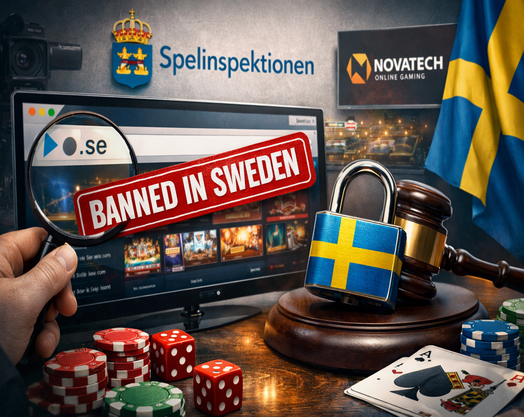
Sweden Tightens Grip on Offshore Gambling



Sweden Tightens Grip on Offshore Gambling
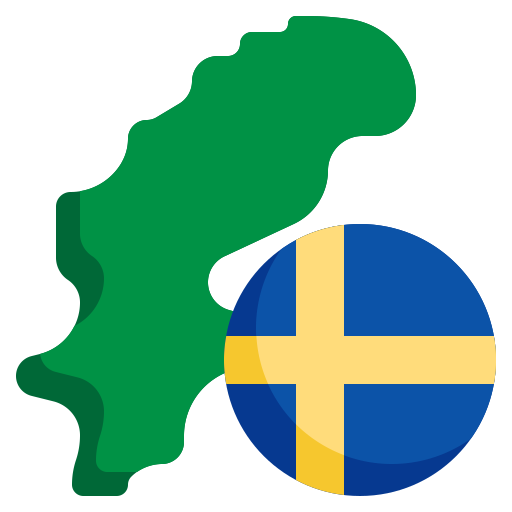
Sweden's gambling authority, Spelinspektionen, has issued a new prohibition order against offshore company Yomoly Ltd, reinforcing its ongoing campaign to curb unlicensed gambling activity within the country. The regulator claims that Yomoly was offering online betting and casino services to Swedish users without the required national licence, placing it in direct breach of the country's Gambling Act.
The decision arrives amid a month of heightened enforcement, following similar actions taken against Bitx Operations and Ryker BV. All three cases underline Spelinspektionen's intent to limit access to gambling platforms operating outside Sweden's licensing framework. The regulator has reiterated that companies continuing to target the Swedish market without authorization could face legal proceedings or administrative penalties.
 However, enforcing such orders has proven complex. Sweden's Gambling Act currently defines market targeting as using the Swedish language or displaying prices and deposits in Swedish krona. This limited interpretation, often referred to as the “directional criterion”, has made it difficult for the regulator to take consistent action against operators whose websites are accessible from Sweden but do not explicitly localize their offerings.
This challenge may soon be addressed through a proposed amendment to the Gambling Act. A government review recently recommended removing the directional criterion altogether, suggesting that the law instead adopt what it terms a “participant perspective.” Under this new approach, jurisdiction would no longer depend on language or currency indicators, but rather on whether individuals in Sweden can access and participate in the gambling service.
 If implemented, this would represent a fundamental shift in Swedish regulatory practice. Rather than requiring proof of intent to target Swedish users, the law would automatically apply to any operator whose services are accessible within the country's borders. Unlicensed companies would therefore need to take active technical measures, such as geoblocking Swedish IP addresses, to avoid falling under Swedish jurisdiction.
Such a reform effectively closes one of the legal gaps that unlicensed operators have used to remain active in the Swedish market since the 2019 re-regulation. Spelinspektionen has consistently argued that the current model makes enforcement overly dependent on interpretation, thereby allowing foreign platforms to operate in a grey area. The proposed shift toward accessibility-based jurisdiction would simplify enforcement and clarify operators' obligations.
 In practice, this would mean that the burden of compliance shifts more firmly onto the operators themselves. Companies without a Swedish licence would be expected to demonstrate that their platforms prevent participation from within Sweden, while licensed providers would continue to operate under the existing regulatory conditions. For the regulator, this would represent a move from reactive oversight, responding to breaches after they occur, toward a more preventive model based on access control.
The prohibition against Yomoly Ltd fits into this evolving context. By issuing another public order, Spelinspektionen reinforces the principle that Sweden's gambling market is reserved for operators who meet its licensing requirements and adhere to its consumer protection framework. The decision also signals that even under the current legal constraints, the regulator intends to maintain an active stance against offshore operators.
 The broader policy discussion reflects a tension between openness and regulation that has defined Sweden's approach to online gambling since its restructured market launched in 2019. The reform was initially designed to channel gambling activity to licensed entities, ensuring that players engage with operators subject to oversight and responsible conduct standards. However, the persistence of offshore websites has shown that regulatory success depends on how clearly national jurisdiction can be defined in a digital environment.
 Spelinspektionen's enforcement activity this month underscores both the persistence of unlicensed operations and the limits of the tools currently available to address them. While prohibition orders can deter some companies, the global nature of online gambling means that access barriers are difficult to enforce without explicit technological or legal mechanisms. The government's legislative review recognizes this reality and aims to redefine how jurisdiction is determined to align with the industry's cross-border nature.
Legal analysts have noted that such a shift would place Sweden's system closer to those of other European jurisdictions that base enforcement on accessibility rather than intent. It would also clarify the regulator's capacity to act against a broader range of operators, strengthening the link between national law and consumer protection objectives. Still, questions remain about how effectively such measures could be implemented and whether they might affect legitimate international platforms that accept players globally without directly marketing to Sweden.
The Hottest Casinos 2025
Check out these recommended brands and start winning big today.
No results were found!