





 International
  Argentina
  Australia
  Austria
  Belgium
  Brazil
  Canada
  Chile
Chile  Czechia
  Denmark
  Estonia
  Finland
  France
  Germany
  Greece
  Hungary
  India
India  Indonesia
  Ireland
  Israel
  Italy
Italy  Japan
Japan  Netherlands
  New Zealand
  Nigeria
  Norway
  Malaysia
  Mexico
  Peru
Peru  Philippines
  Poland
  Qatar
Qatar  Romania
  Russia
  Slovakia
  Slovenia
  South Africa
  South Korea
  Spain
Spain  Sweden
  Switzerland
  Thailand
  Turkey
  Vietnam
  UAE
UAE  United Kingdom
  USA
USA - Casino News
- Industry News
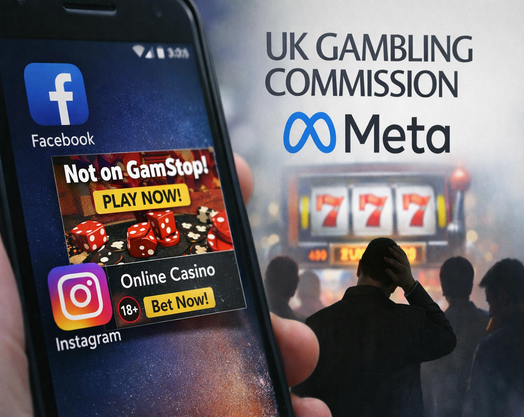
Paid Promotions, Unlicensed Casinos, and Questions for Big Tech


Paid Promotions, Unlicensed Casinos, and Questions for Big Tech
Illegal online gambling has long existed at the margins of regulated markets, but UK regulators are increasingly concerned that it is no longer confined to obscure corners of the internet. Instead, unlicensed operators are appearing in plain sight, using mainstream advertising tools on major social media platforms. This shift has placed Meta, the owner of Facebook and Instagram, under renewed scrutiny from the UK Gambling Commission, which is questioning how effectively the company enforces its own advertising standards.
The issue came into sharper focus during a gambling industry event in Barcelona, where a senior Commission figure described a pattern that has become difficult to ignore. Paid advertisements for unlicensed online casinos, he said, are regularly shown to users in Great Britain, including individuals who have registered with GamStop, the national self-exclusion scheme designed to block access to licensed gambling services.
 What distinguishes these advertisements is not subtlety. Many openly promote themselves as alternatives for people who have chosen to restrict their gambling, using direct language such as “Not on GamStop.” For the regulator, this messaging cuts to the core of the problem. Self-exclusion relies on cooperation between licensed operators, regulators, and intermediaries. When unlicensed sites use mainstream platforms to bypass those safeguards, the integrity of the system is weakened.
The Gambling Commission's criticism has focused less on the existence of illegal advertising, which it views as an ongoing enforcement challenge, and more on how platforms respond once such activity is present. Meta has stated that it removes gambling advertisements that breach its policies when they are identified or reported. However, the regulator has questioned claims that the company was unaware of the problem's scale until external parties drew attention to it.
 According to the Commission, the ads in question were visible through Meta's own advertising library, a public database designed to promote transparency around paid content. Searches revealed advertisers openly stating that their gambling sites were not connected to GamStop. From the regulator's perspective, this undermines arguments that detection depends solely on reports from regulators or users. If the information is publicly available, the Commission has argued, then platforms should be able to identify it themselves.
This point was raised bluntly during the Barcelona event. The regulator suggested that continued claims of ignorance could create the impression that platforms are willing to accept advertising revenue linked to illegal activity unless forced to intervene. While stopping short of alleging intent, the Commission made clear that reactive enforcement does not align with the level of control platforms exercise over their advertising systems.
 Meta has responded by emphasising cooperation. A spokesperson stated that the company has been working with the Gambling Commission to remove flagged content and that intelligence shared by regulators is being used to refine detection tools. Meta has framed the issue as one that benefits from ongoing dialogue, highlighting efforts to improve automated monitoring of gambling-related ads.
Despite these assurances, the regulator has expressed dissatisfaction with the pace and substance of engagement. It has pointed to instances where Meta suggested that regulators themselves could deploy artificial intelligence to identify problematic advertising. For the Commission, this raises a broader concern about responsibility. Expecting public bodies to monitor commercial advertising platforms, it argued, shifts both cost and accountability away from companies that design and profit from those systems.
 The discussion around Meta sits within a wider regulatory assessment of how illegal gambling operates in digital markets. The Commission has warned that shared supply chains increasingly blur the lines between regulated and unregulated activity. Affiliates, marketing agencies, technology providers, and payment services may work with both licensed and unlicensed operators, creating points of leakage that allow illegal advertising to persist.
 Licensed operators have not been excluded from this scrutiny. The regulator has urged them to strengthen their due diligence when engaging third parties, ensuring that commercial partners do not simultaneously support unlicensed competitors. From the Commission's perspective, contractual oversight is a practical tool for reducing the indirect promotion of illegal gambling.
Enforcement remains part of the response. Over the past year, the Gambling Commission has issued multiple cease-and-desist notices and disrupted hundreds of unlicensed gambling websites. Additional government funding and proposed powers to suspend domain names and IP addresses linked to illegal operators are expected to expand these capabilities. Still, the regulator has been clear that enforcement measures have limits when illegal operators can quickly re-establish their presence through mainstream advertising channels.
Top Online Casinos On Our Land
10 Recommended Online Brands On CasinoLandia That Will Enhance Your Gaming Experience
No results were found!