




 International
  Argentina
  Australia
  Austria
  Belgium
  Brazil
  Canada
  Chile
Chile  Czechia
  Denmark
  Estonia
  Finland
  France
  Germany
  Greece
  Hungary
  India
India  Indonesia
  Ireland
  Israel
  Italy
Italy  Japan
Japan  Netherlands
  New Zealand
  Nigeria
  Norway
  Malaysia
  Mexico
  Peru
Peru  Philippines
  Poland
  Qatar
Qatar  Romania
  Russia
  Slovakia
  Slovenia
  South Africa
  South Korea
  Spain
Spain  Sweden
  Switzerland
  Thailand
  Turkey
  Vietnam
  UAE
UAE  United Kingdom
  USA
USA - Bonuses & Promotions
- Casino News
- Game Providers
- USA News
One Year In, Brazil’s Online Gambling Reform Shows Growth


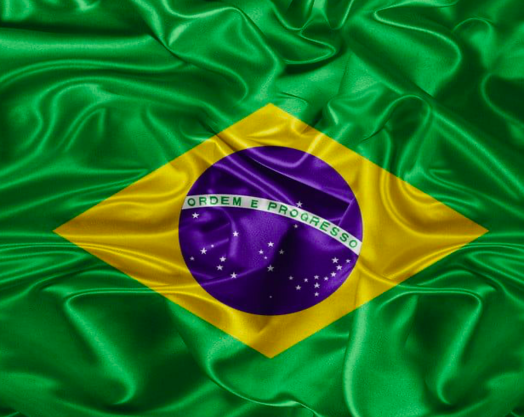
Brazil’s Gambling Market Evolves
After years of legislative delays and political debate, Brazil officially launched its regulated online gambling market on 1 January 2025. One year on, the sector has expanded rapidly, but concerns over taxation, enforcement and long-term stability are casting uncertainty over its future as the market enters its second year.
The regulated framework brought an end to Brazil’s long-standing grey market, where hundreds of betting platforms operated without federal oversight. The launch began with 14 fully licensed operators and has since grown to more than 80 companies authorised at the federal level. Industry figures say the pace of adoption and compliance has exceeded initial expectations.
Udo Seckelmann, head of gambling and crypto at Brazilian law firm Bichara e Motta Advogados, describes the first year as a success in regulatory terms. He points to the volume of legislation, ordinances and federal rules enacted over the past two years as evidence of institutional commitment. Hugo Baungartner, chief business officer at Esportes Gaming Brasil, agrees, highlighting how quickly operators transitioned from an informal environment to a tightly regulated framework.
According to Baungartner, licensed operators invested heavily in compliance, technology and personnel to meet the new requirements. He characterises the market’s evolution as a shift toward greater professionalism and maturity, rather than simple expansion.
| Aspect | Details |
|---|---|
| Launch Date | 1 January 2025 |
| Licensed Operators | 14 initially, now over 80 |
| Key Challenges | Illegal operators, taxation, KYC friction |
| Major Tax Changes | GGR tax to rise to 15% by 2028; CIDE-Bets deposit tax proposed |
| Market Outlook | Consolidation expected; channelisation a key metric |
Early Friction and KYC Challenges
The opening months of regulation were marked by friction in customer onboarding, particularly around Know Your Customer (KYC) requirements. Players were required to submit facial recognition data and extensive personal information, a process that initially slowed registrations and caused frustration among users.
Baungartner says this friction was largely unavoidable in a newly regulated market and argues that it diminished as players became more familiar with the rationale behind verification. He adds that improvements by KYC service providers have made onboarding faster and more intuitive over time.
The government’s Secretariat of Prizes and Bets (SPA) attempted to clarify requirements by publishing frequently asked questions, but Seckelmann says inconsistent interpretation created uneven enforcement. Some operators adopted more permissive readings of the rules, reducing friction for customers and potentially gaining a competitive advantage over stricter competitors. Despite the growth of the licensed sector, illegal operators continue to command a significant share of Brazil’s online gambling activity. Estimates cited by industry stakeholders suggest unlicensed platforms account for between 41% and 51% of the total iGaming market.
Seckelmann says efforts to curb illegal gambling have lagged behind expectations. While authorities have blocked more than 18,000 betting websites, he argues that domain and IP blocking is insufficient on its own. In his view, enforcement should focus more heavily on preventing illegal operators from accessing Brazil’s financial system.
Baungartner echoes this assessment, stating that payment access is the black market’s most critical vulnerability. He highlights Brazil’s Pix instant payment system, which is regulated and traceable through the Central Bank, as a potential enforcement advantage. Both agree that cooperation between the SPA, the Central Bank and payment service providers will be key to reducing illegal activity.
Taxation and Advertising Pressures





More pressing for operators are proposed tax increases. The government is seeking additional revenue to address a BRL20 billion budget gap ahead of the next general election. After abandoning earlier proposals for steep tax hikes and retrospective charges, the administration is expected to approve a phased increase in the gross gaming revenue tax, rising from 12% to 15% by 2028.
Industry figures warn that a separate proposal, known as CIDE-Bets, could have more severe consequences. The measure would impose a 15% tax on player deposits and reintroduce retrospective taxation. Seckelmann cautions that such a levy could severely undermine channelisation, as players may turn back to illegal operators offering full-value deposits.
Consolidation and Market Reshaping
Higher compliance costs and potential tax increases are expected to accelerate consolidation within the market. Estimates from H2 Gambling Capital suggest that three major brands—Betano, Superbet and Bet365—already account for nearly half of the market. Baungartner views consolidation as a natural and healthy outcome of regulation, arguing it will lead to better-capitalised operators and long-term stability. M&A advisor Christian Tirabassi has previously predicted that as few as 12 operators could ultimately dominate the Brazilian market, a view Seckelmann says is already reflected in early merger discussions.
Even in highly mature markets like the UK, after decades of regulation, there is still a small percentage of illegal activity. If Brazil can reduce that to a minimal level, the system will be working as intended.
An Uncertain Second Year
As Brazil’s regulated online gambling market enters its second year, channelisation remains the primary metric by which success will be judged. Seckelmann suggests that a regulated share below 60% within two to three years would signal failure, while levels above 70% would indicate effective policy.
Baungartner believes Brazil’s strict initial framework—characterised by strong KYC rules, Pix-based payments and the absence of cash or credit card betting—has placed the market on solid footing, even if some view it as overregulation.
The first year of regulation has established the foundations of Brazil’s online gambling market. Whether those foundations can withstand rising taxes, enforcement challenges and political pressure will determine if early momentum translates into long-term sustainability.
The Hottest USA Casinos 2025

 Rated 79.82/100%
welcome bonus
Get up to $100,000.00 in bonuses for your first 4 deposits.
50x wagering (Deposit & Bonus)
Rated 92.95/100%welcome bonus
200% up to €1,000 Cash Bonus
30x wagering (Deposit & Bonus)
Rated 78.46/100%welcome bonus
UP TO 1500€ AND 300 FS!
20x wagering (Deposit & Bonus)
Rated 79.73/100%welcome bonus
Up to 3 000 € + 600 FS
30x wagering (Deposit & Bonus)
Rated 92.97/100%welcome bonus
€2,000 and 200 Free Spins
40x wagering (Deposit & Bonus)
Rated 79.31/100%welcome bonus
300%/€2000 + 300 Free Spins
35x wagering (Deposit & Bonus)
 Rated 92.40/100%
welcome bonus
100% First Deposit Bonus – up to $1,000
40x wagering (Deposit & Bonus)
Rated 92.95/100%welcome bonus
100% Welcome Bonus
20x wagering (Deposit & Bonus)
https://m.hv119.fun/en/terms-and-conditions
Rated 92.97/100%welcome bonus
20 000 ₺ + 525 Free Spins
40x wagering (Deposit & Bonus)
Rated 92.96/100%welcome bonus
200%/€2500 + 300 Free Spins
35x wagering (Deposit & Bonus)
Top 10 best casinos
$titl$ is RESTRICTED IN United States. Our Current Top Picks for United States are below: