





 International
  Argentina
  Australia
  Austria
  Belgium
  Brazil
  Canada
  Chile
Chile  Czechia
  Denmark
  Estonia
  Finland
  France
  Germany
  Greece
  Hungary
  India
India  Indonesia
  Ireland
  Israel
  Italy
Italy  Japan
Japan  Netherlands
  New Zealand
  Nigeria
  Norway
  Malaysia
  Mexico
  Peru
Peru  Philippines
  Poland
  Qatar
Qatar  Romania
  Russia
  Slovakia
  Slovenia
  South Africa
  South Korea
  Spain
Spain  Sweden
  Switzerland
  Thailand
  Turkey
  Vietnam
  UAE
UAE  United Kingdom
  USA
USA - Casino News
- Industry News
Inside the Dutch Gambling Authority’s 2026 Oversight Agenda


Inside the Dutch Gambling Authority’s 2026 Oversight Agenda
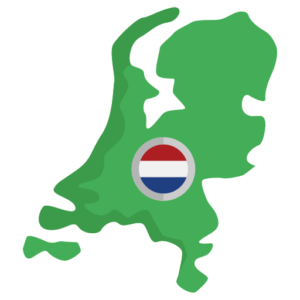
As the Dutch gambling market matures, regulatory priorities are shifting. The Kansspelautoriteit (KSA) has signalled that 2026 will mark a period of closer scrutiny, with player protection and market integrity moving further to the centre of its supervisory agenda. Rather than introducing a new regulatory framework, the authority is refining how existing rules are enforced, monitored, and evaluated.
The agenda reflects a broader reassessment of how regulation functions once a legal market has passed its initial expansion phase. While channelisation remains relatively high, the KSA has acknowledged that legal availability alone does not resolve concerns around risky behaviour, advertising pressure, or the persistence of illegal offerings. The newly published supervisory plan sets out how the authority intends to address these challenges through more targeted oversight and closer cooperation with both public and private actors.
 A notable structural change underpins this approach. The establishment of a dedicated player protection department within the KSA’s revised organisation suggests a move away from fragmented supervision toward a more coordinated model. This internal shift is intended to strengthen oversight of duty of care, advertising practices, and the treatment of vulnerable groups, areas that increasingly intersect in regulatory assessments.
Illegal gambling continues to shape much of the authority’s thinking. Although the KSA estimates that the majority of Dutch players use licensed operators, the regulator has made clear that even a limited illegal segment can undermine policy goals. Its strategy for addressing this challenge is based less on isolated enforcement actions and more on disrupting the infrastructure that keeps illegal offerings visible and accessible.
 Recent efforts have focused on digital channels. Cooperation with the Foundation for Internet Domain Registration in the Netherlands has led to the blocking of domestic affiliate websites linked to unlicensed operators, while ongoing collaboration with social media platforms has resulted in the removal of illegal promotional content. These measures are now being extended through investigations linked to the Digital Services Act, signalling a closer alignment between gambling supervision and broader digital regulation.
Attention is also turning back to the physical environment. The KSA is examining what happens to slot machines after events such as bankruptcies, where oversight can weaken, and equipment may reappear in unregulated settings. To address this risk, the authority is building a dedicated network to monitor supply routes connected to illegal land-based operations, complementing existing cooperation with other government bodies.
 Player protection, however, remains the most prominent theme of the 2026 agenda. The regulator has identified minors and young adults as groups requiring particular attention, noting that access to gambling often occurs through accounts registered to adults. Using data from control systems, the KSA is assessing how frequently this happens and how operators respond when such cases are detected.
Beyond compliance checks, the authority is investing in research to understand better why young people gamble and what factors influence their decisions. The findings are expected to inform future preventive measures, including adjustments to advertising supervision. At the same time, public awareness initiatives are being refreshed, with the launch of the Open over Gokken, Open about Gambling platform intended to centralise information for players, families, and professionals.
 The duty of care framework is set to undergo further testing in practice. In 2026, the KSA will continue monitoring how operators apply strengthened care obligations, particularly in relation to player limits and behavioural signals. Ongoing studies examine how providers assess a player’s financial capacity, an area attracting growing regulatory attention as part of broader harm-prevention efforts.
The authority is also reviewing how quickly operators act when indicators of risky behaviour emerge and whether certain internal management practices may conflict with care obligations. Investigations linked to the Cruks self-exclusion system, including follow-up interviews, are scheduled to conclude in early 2026. The resulting recommendations are expected to inform supervisory assessments directly.
 Technology is increasingly playing a role in these processes, prompting the KSA to prepare guidance on the use of automated monitoring tools and artificial intelligence by operators. While such systems can support early detection, the regulator has stressed the need for transparency and accountability in decision-making. Oversight of land-based duty of care will continue alongside digital supervision, ensuring that physical venues are not treated as secondary.
 Advertising supervision forms another strand of the agenda, with the authority aiming to reduce violations and limit exposure among vulnerable groups. Existing restrictions on role models, influencers, untargeted advertising, and sports sponsorships remain firmly in place. Further clarification of acceptable practices is expected through additional guidance, reinforcing the principle that advertising may occur only within clearly defined boundaries.
Financial integrity completes the picture. The KSA has confirmed that new anti-money laundering rules are in development, covering areas such as sanctions monitoring and cash thresholds. Compliance with existing legislation will continue to be assessed through risk-based supervision and targeted investigations, while forthcoming guidance from the European Anti-Money Laundering Authority is expected to influence national practices.
Top MGA Online Casinos
10 Recommended MGA Online Brands On CasinoLandia That Will Enhance Your Gaming Experience
No results were found!