Global:
Core Trend Categories
Main Trends Page
Casino Trends
Slot Trends
Crypto Casino Trends
Live Casino Trends
Bonus Trends
Sports betting has entered a new era defined by innovation, data, and digital immersion. The modern bettor expects more than simple odds; they want personalized insights, instant interaction, and seamless entertainment. Advances in artificial intelligence, blockchain, and real-time analytics are transforming how wagers are placed and experienced across global markets. At the same time, social engagement, mobile design, and responsible play are reshaping user behavior. The following trends reveal how technology and creativity are driving the future of sports betting, creating platforms that are smarter, faster, and more connected than ever before.


Personalization now defines modern sports betting. Using artificial intelligence and behavioral analytics, platforms adapt odds, recommendations, and promotions for each individual. Machine learning identifies patterns in player behavior, favorite teams, and wagering styles to predict preferences in real time. This not only boosts engagement but also supports safer gambling by detecting risk patterns early. Data-driven personalization replaces the one-size-fits-all approach with customized user journeys that feel relevant and intelligent. For operators, it means higher retention and lifetime value. For players, it delivers a betting experience that is more meaningful, transparent, and efficient.
In play and micro betting have redefined how fans interact with live sports. Rather than waiting for full-time results, users can now wager on immediate outcomes such as the next goal, ace, or corner. This constant stream of opportunities keeps engagement high throughout the match. Achieving this requires advanced data feeds, real-time analytics, and extremely low latency streaming. These technologies create a fast, responsive environment where information and odds update in seconds. The result is a dynamic, immersive experience that merges the thrill of live action with instant decision making and constant excitement.
Gamification is changing online betting from a solitary habit into a shared experience. Platforms borrow ideas from video games and social networks, introducing leaderboards, achievements, and group challenges. These features reward activity and encourage friendly competition among users. Social elements such as chat functions and community events deepen connection and keep players returning more often. This approach attracts younger audiences who value interaction and recognition as much as winning potential. By combining gameplay mechanics with betting, operators extend session length, increase loyalty, and transform wagering into a more interactive and entertaining digital sport.
The line between watching and betting is disappearing. Many platforms now allow users to stream live matches and place wagers within the same interface. This creates a seamless experience that transforms passive viewing into active participation. Strategic partnerships between bookmakers, data providers, and broadcasters are driving this convergence. It offers new revenue streams through both media rights and betting margins while giving users one integrated destination for entertainment. The combination of live video and interactive wagering keeps fans engaged for longer and represents a major step toward fully immersive sports experiences.
Blockchain technology is bringing trust and transparency to sports betting. Decentralized platforms let players deposit, bet, and withdraw funds using cryptocurrencies, enabling faster payments and lower transaction costs. Smart contracts execute wagers automatically, removing intermediaries and ensuring fairness. Every transaction is recorded on a public ledger, making results verifiable and tamper proof. This appeals to tech-savvy users and those in regions with limited access to traditional banking. While regulatory frameworks are still developing, blockchain betting points toward a future where openness, speed, and user control are at the center of the experience.
As digital betting expands, responsible play has become a central concern. Operators now use artificial intelligence to monitor user behavior and identify early signs of risky activity. Algorithms can detect unusual spending, set limits, or prompt players to take breaks. Governments are also introducing stricter verification and compliance standards to protect consumers. These measures not only meet legal requirements but also build long-term trust with users. Responsible betting technology demonstrates that innovation and ethics can work together, creating an industry that values sustainability and user well-being as much as profit and performance.
Mobile design is now the foundation of the betting industry. With most wagers placed through phones, apps must be intuitive, fast, and visually engaging. The best platforms borrow design language from entertainment apps, offering simple navigation, instant updates, and one-tap betting. Features like biometric login, real-time notifications, and personalized dashboards improve both security and convenience. Every detail is optimized for quick interactions that fit seamlessly into daily life. Mobile first innovation is not just about screen size; it defines how a new generation of players experiences sports, entertainment, and betting together.
Esports and virtual sports are creating the next frontier for betting. Competitive gaming attracts younger, digitally native audiences who expect fast action and constant availability. Betting on video game tournaments or simulated matches offers new excitement and continuous events, unbound by real world schedules. This growth challenges operators to manage data integrity, prevent match manipulation, and adapt regulation to a new format. With global audiences already in the hundreds of millions, esports and virtual sports represent a massive opportunity to expand betting beyond traditional boundaries and redefine what counts as sport in the digital age.
Artificial intelligence is transforming how odds are created, monitored, and optimized. Modern sportsbooks use machine learning to analyze vast data sets from player statistics, weather patterns, and betting behavior to model outcomes with unprecedented precision. These systems can adjust odds automatically in real time, detect suspicious activity, and enhance operational efficiency. For users, AI creates smarter pricing and more accurate predictions. For operators, it delivers sharper margins and better risk control. As predictive analytics advance, artificial intelligence will move from behind-the-scenes support to a defining force in shaping the future of digital betting.
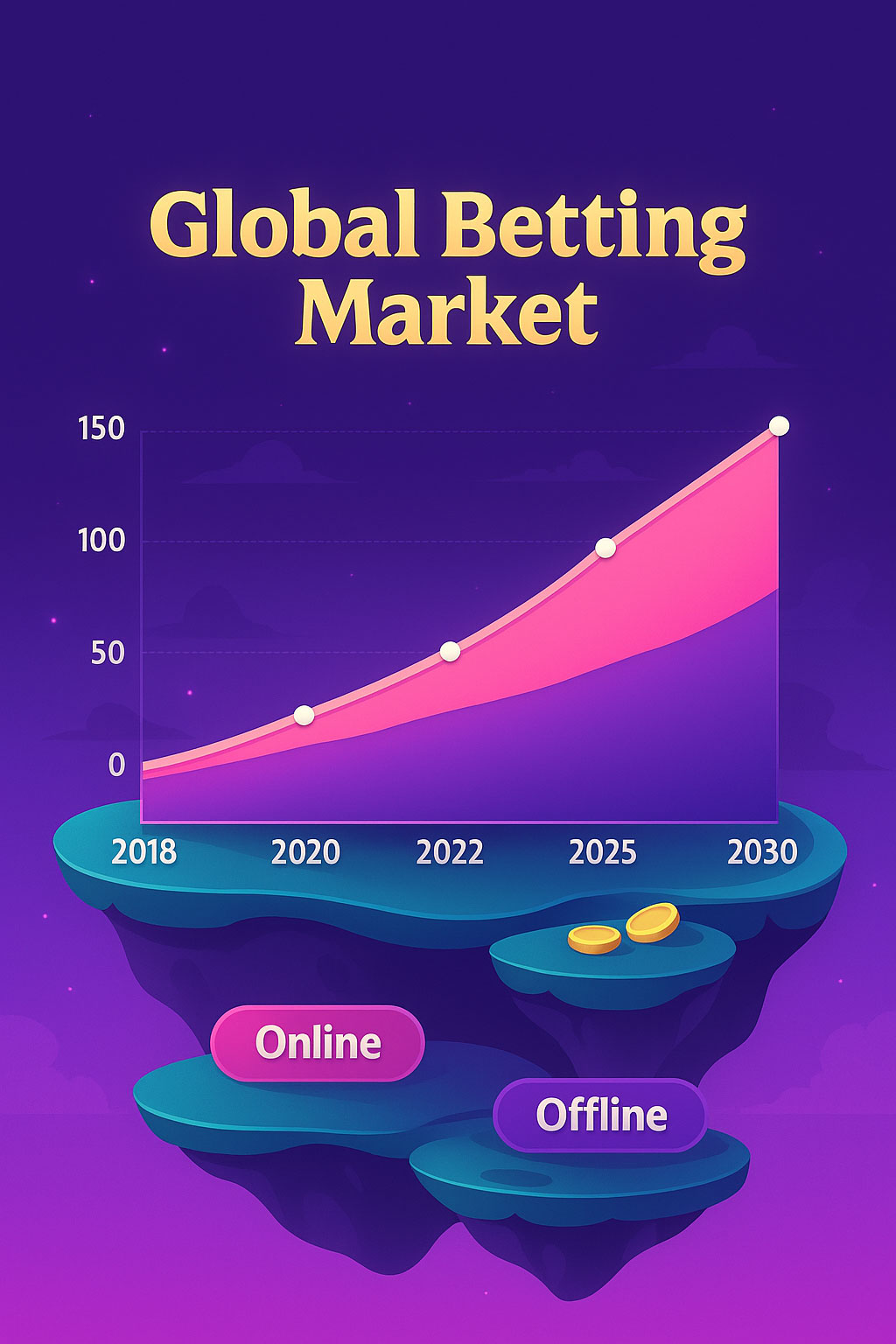
The sports betting industry has transformed into one of the most dynamic and steadily expanding sectors in the global entertainment economy. What began as a fragmented network of local bookmakers has evolved into a connected, high-value digital marketplace. In 2025, global sports betting revenues are estimated at around 140 billion dollars, up from approximately 90 billion in 2020, marking one of the most consistent growth curves in digital entertainment. Projections suggest that by 2030, the industry will reach nearly 200 billion dollars, representing a compound annual growth rate of about eight percent. This rise reflects not only increased user participation but also the structural shift from retail to digital models, turning betting into a truly global, scalable industry.


The market also proved unusually strong during the pandemic in 2020, when the temporary cancellation of live sports caused only a brief slowdown. Operators quickly adapted by expanding into esports, virtual sports, and simulated betting, restoring global revenue within a year. By 2021, total betting volume had already surpassed pre-pandemic levels and continued to grow at a compound annual rate above seven percent.
Another key factor behind this resilience is the broad spread of market participation. Growth is not limited to one region but distributed across multiple expanding jurisdictions. Europe provides maturity and stability, while the United States market has grown from less than 3 billion in 2018 to more than 15 billion in 2024 following legalization in numerous states. Brazil, Mexico, and India are entering similar stages of expansion, each adding millions of new players to the global total. No single region now contributes more than forty percent of global betting revenue, reducing the risk of regional downturns and ensuring balanced growth.
Sports betting also benefits from steady consumer spending behavior. Reports from leading operators such as Flutter Entertainment and Entain show that monthly active users and average stake sizes have remained stable even during broader economic slowdowns. Betting, like mobile gaming and streaming, functions as an affordable and frequent form of digital entertainment that consumers continue to enjoy even when cutting other expenses.
Together, these structural strengths have made sports betting one of the few global entertainment markets that demonstrate continuous and measurable growth. With diversified geography, fast digital adoption, and adaptable products, the industry has evolved from a leisure pastime into a stable, high-volume component of the global digital economy.
| Year | Global Market Value (USD billions) | Year-on-Year Change |
|---|---|---|
| 2018 | 85 | — |
| 2020 | 90 | +6% |
| 2022 | 115 | +14% |
| 2025 | 140 | +9% |
| 2030 (forecast) | 200 | +8% (CAGR) |
The data shows that sports betting growth has been sustained through regulatory evolution, mobile adoption, and broader cultural acceptance. Unlike speculative markets, this expansion is structural, built on a growing number of active jurisdictions and a consistent increase in total wagering volume.
Digital transformation remains the single largest force behind market size growth.
In 2025, more than 60 percent of all wagers are placed online, and this share is expected to surpass 75 percent by 2030. The rise of mobile apps, digital payments, and global streaming has enabled access to betting platforms in ways that were not possible a decade ago. Importantly, this growth is not merely migration from offline channels — it represents net market expansion through new user participation.
The online shift effectively multiplies market reach, reduces barriers to entry, and supports the integration of other digital services such as live streaming and data analytics.


| Region | 2025 Market Share | Growth Outlook to 2030 | Key Characteristics |
|---|---|---|---|
| Europe | 35–40% | Moderate, stable growth (3–5%) | Mature, highly regulated, strong in-play markets and mobile adoption |
| North America | 25–30% | Fast growth (10–12%) | Rapid legalization, mobile-driven participation, heavy media integration |
| Asia-Pacific | 20–25% | Strong growth (9–11%) | Expanding mobile base, emerging regulatory frameworks, high sports engagement |
| Latin America | 10–15% | Very high growth (12–15%) | Legal reforms in Brazil and Mexico, growing youth population, football-centric markets |
| Africa & Middle East | 5–7% | Gradual growth (6–8%) | Mobile-first usage, improving digital infrastructure, early-stage regulation |
Europe remains the most mature and stable region for sports betting, accounting for nearly 40 percent of global revenue. Countries such as the United Kingdom, Italy, Spain, and France have established clear regulatory systems that support both consumer protection and operator innovation. European bettors are early adopters of live, in-play markets, and mobile penetration exceeds 85 percent in most major countries. Although annual growth rates are moderate at around 4 percent, Europe’s strong base and technological sophistication make it a cornerstone of the global industry.
Since the 2018 repeal of the U.S. federal ban on sports wagering, North America has become the single fastest-growing region in the world. The United States market expanded from under 3 billion in 2018 to over 15 billion in 2024, with projections approaching 30 billion by 2030. Growth is being fueled by state-by-state legalization, widespread adoption of mobile apps, and partnerships between sportsbooks, sports leagues, and broadcasters. Canada’s legalization of single-event betting in 2021 also added new momentum. This region is now the main driver of year-over-year global expansion and serves as a model for regulated, media-integrated betting.
The Asia-Pacific region represents the largest untapped growth potential for the global betting industry. Although regulatory structures vary widely, mobile adoption and digital payments are driving rapid participation. Markets such as India, the Philippines, and Vietnam are experiencing strong growth in both legal and informal betting channels, while Australia remains a major mature market with high per-capita betting activity. By 2030, Asia-Pacific is projected to account for up to 25 percent of global revenue, supported by a young population, a vibrant sporting culture, and improving access to regulated online platforms.
Latin America is entering a period of rapid expansion as more countries modernize their gaming laws. Brazil’s national betting regulation (enacted in 2024) is expected to make it one of the top ten global markets within five years. Mexico, Colombia, and Argentina also show strong adoption through mobile-first platforms and football-driven betting habits. With a population of over 650 million and a median age under 30, the region combines youthful engagement with growing digital access. Forecasts suggest annual growth of 12 to 15 percent, making it the most dynamic emerging market globally.
While still representing a smaller share of global volume, African and Middle Eastern markets show encouraging progress. Nigeria, Kenya, and South Africa lead the continent with strong mobile betting participation, while Morocco and Egypt are developing new regulatory frameworks. In the Middle East, the United Arab Emirates and Saudi Arabia are exploring controlled licensing as part of broader economic diversification. Average growth rates are 6 to 8 percent annually, supported by high smartphone penetration and expanding payment systems.


The market’s fastest growth comes from users under 35, who are digitally fluent and comfortable with gamified interfaces. Female participation has nearly doubled over the past five years, particularly in mobile fantasy sports and prediction-based games, signaling a more inclusive future market.
| Demographic Group | Estimated Share (2025) | Key Characteristics |
|---|---|---|
| Age 18–24 | 20% | New digital-first users, esports and micro-betting fans |
| Age 25–34 | 35% | Core mobile users, most active demographic globally |
| Age 35–44 | 25% | High-value bettors with established brand loyalty |
| Age 45+ | 20% | Traditional players, prefer major events and familiar interfaces |
| Gender Split | 80% male / 20% female | Female participation rising through social and fantasy platforms |
Sports betting is now overwhelmingly mobile. More than 80 percent of online bets are placed through smartphones, and this share continues to grow each year. Tablet and desktop usage remain relevant for high-stake and in-depth analytics bettors, but mobile dominates casual engagement and real-time wagering.
Device usage patterns (2025 estimates)
Mobile betting behavior mirrors the habits of social media and short-form video users – fast, continuous, and personalized. Operators are responding with one-click interfaces, biometric login, and predictive odds tailored to individual browsing and betting patterns.
Modern bettors are not only more numerous but also more active. The rise of in-play and micro-betting has significantly increased betting frequency, even as average stake size has decreased.
Behavioral indicators:
Engagement has shifted from large, infrequent wagers to continuous participation. The emphasis is now on interaction and immersion rather than one-off bets – a shift aligning betting behavior with general trends in digital entertainment.
Recent studies show that users bet primarily for entertainment and engagement, not solely for profit. Around 65 percent of bettors say they place bets to “make watching sports more exciting,” while only 25 percent cite “financial gain” as the main motivation.
Key motivators (global survey data):
This psychological profile places sports betting firmly in the entertainment economy. Operators who focus on fun, safe, and social engagement will continue to capture market share, while purely transactional models risk losing relevance.
The global sports betting market is shaped by the popularity, frequency, and data accessibility of individual sports. Football continues to dominate, while basketball, tennis, and esports are expanding rapidly as betting becomes more diverse and digitally integrated. Each sport contributes differently to overall market volume depending on its global reach, scheduling consistency, and availability of real time data. Understanding this distribution helps explain how fan engagement translates directly into betting behavior and long term market growth.
| Sport | Share of Global Betting Volume | Growth Outlook to 2030 | Key Notes |
|---|---|---|---|
| Football (Soccer) | 50–60% | Stable | Global reach, constant schedule, and data-rich structure |
| Tennis | 10–15% | Strong | Ideal for live betting due to frequent matches |
| Basketball | 8–10% | High | Rapid expansion in the United States and Asia |
| Esports | 3–5% | Very high | Fastest growing segment, driven by younger audiences |
| Horse Racing | 5–7% | Declining | Still strong in the United Kingdom, Japan, and Australia |
| Cricket | 4–6% | Moderate | Major activity in South Asia and Commonwealth countries |
| American Football | 3–4% | Strong in North America | NFL and college sports generate seasonal peaks |
| Other Sports | 3–5% | Mixed | Niche markets with loyal followings such as golf and rugby |
Football is the undisputed leader of the global sports betting market, accounting for more than half of total betting activity worldwide. Its universal popularity, continuous schedule, and data transparency make it ideal for both pre-match and live wagering. Major European leagues such as the Premier League, La Liga, and Serie A generate massive weekly volumes, while global tournaments like the UEFA Champions League and FIFA World Cup create seasonal peaks that attract casual and professional bettors alike. Football’s dominance also comes from its global accessibility, extensive live data coverage, and the sheer number of events available across every continent.
Tennis ranks among the top sports for online betting, driven by its individual nature and constant calendar of events. With thousands of matches each year across ATP, WTA, and Challenger tournaments, tennis offers bettors near-continuous opportunities to place wagers. Its point-by-point structure makes it ideal for live betting, as odds fluctuate rapidly with each serve and rally. Operators benefit from strong data integration, allowing fast odds adjustments and real-time engagement. While Europe leads in tennis betting volume, growth is accelerating in Asia-Pacific and Latin America as streaming coverage expands and digital platforms make smaller, in-play wagers easier to access.
Basketball has become one of the fastest-growing sports in the global betting landscape, capturing between eight and ten percent of total betting volume. The sport’s frequent scoring, fast pace, and constant flow of action make it perfect for in-play markets. The NBA remains the cornerstone, attracting bettors from around the world, but interest is also increasing in European and Asian leagues. Mobile and micro-betting formats align naturally with basketball’s tempo, encouraging frequent engagement and small, repeat wagers. As basketball continues to grow globally-especially in China, the Philippines, and the United States-its share of total betting volume is expected to rise significantly through 2030.
Esports represents the most dynamic and rapidly expanding segment of the sports betting industry. With organized competitions in games such as Counter Strike, League of Legends, and Dota 2, the esports ecosystem has evolved into a multi-billion-dollar global phenomenon. Betting on esports has surged by more than forty percent annually since 2020, driven primarily by younger audiences and integrated live-streaming platforms like Twitch and YouTube Gaming. Esports betting operates around the clock, supported by predictable event schedules and standardized data feeds. This accessibility and global audience engagement make esports a major driver of future growth in online wagering, especially among Generation Z users.
Horse racing remains one of the oldest and most traditional betting markets, maintaining a dedicated following even as newer sports gain traction. It contributes roughly five to seven percent of global betting volume, with strongholds in the United Kingdom, Japan, Australia, and Hong Kong. Racing’s appeal lies in its heritage, established data integrity, and organized calendar of events. However, growth has slowed as younger bettors gravitate toward faster, digital-first sports. The segment still offers significant revenue stability in mature markets, where large-scale events like the Grand National, the Melbourne Cup, and the Japan Cup continue to draw mass participation and media attention.
Cricket commands a passionate betting audience across South Asia, the United Kingdom, and Commonwealth countries. Its share of the global betting market ranges between four and six percent, supported by the immense popularity of domestic leagues like the Indian Premier League (IPL) and international tournaments such as the ICC World Cup. Cricket’s extended match format creates both pre-match and in-play opportunities, particularly for micro-betting on overs, wickets, and individual performances. The rise of Twenty20 cricket has made the sport faster and more accessible to casual bettors, driving steady growth. As new online platforms enter developing markets, cricket’s contribution to global betting revenue continues to climb.
American football has a concentrated but highly lucrative betting audience, primarily in the United States. Following legalization across multiple U.S. states, the market for NFL and college football betting has expanded dramatically. The sport’s structured format and high-profile games generate intense betting activity during the season, creating sharp peaks in volume. While its global presence is limited compared to football or basketball, the U.S. market alone contributes billions in annual handle. Digital platforms and media partnerships with major broadcasters have helped transform football betting into a mainstream entertainment experience, reinforcing its position as one of North America’s key betting products.
Beyond mainstream categories, niche sports such as rugby, golf, baseball, and motorsports maintain loyal and consistent betting communities. These sports collectively account for around three to five percent of global betting volume but play a critical role in diversifying operator portfolios. Rugby and golf in particular attract international audiences through major tournaments like the Rugby World Cup and The Masters. Motorsports, led by Formula 1, are gaining online betting traction thanks to enhanced data feeds and live timing technology. While these categories represent smaller shares of volume, they offer seasonal balance and attract dedicated bettors with specialized knowledge.
Technology is the invisible backbone of today’s sports betting industry.
Every market movement, transaction, and personalized offer relies on a network of digital systems built for speed, data precision, and security.
The world’s leading operators compete not by offering the highest odds, but by delivering the fastest, smartest, and safest experiences possible.
Modern sportsbooks depend on high-frequency feeds from official sports data partners, allowing them to refresh prices, detect anomalies, and adjust exposure in real time.
The difference between a two-second and a five-second delay can define a company’s profitability.
| Metric | 2025 Value | Strategic Impact |
|---|---|---|
| Automated Data Feeds | Used by 90% of major operators | Enables instant odds calculation |
| Odds Refresh Speed | 2–5 seconds | Supports in-play markets |
| Predictive Analytics | Improves margins by 10% | Reduces risk and pricing errors |
Artificial intelligence has become the quiet strategist behind modern betting.
It powers personalization, risk management, and responsible gaming initiatives – while improving efficiency for operators.
AI systems now decide what odds a bettor sees, what offers they receive, and even when they should take a break.
How AI Transforms Operations
Around 70 percent of major operators now rely on AI-based engines for customer engagement and trading.
The technology’s strength lies not in replacing human expertise, but in scaling it across millions of simultaneous bets.


Behind every top-tier betting operator is a powerful cloud network.
Cloud technology allows platforms to scale instantly during major global events – like the World Cup or Super Bowl – when user traffic can spike by hundreds of percent.
This ensures zero downtime and consistent performance across mobile and desktop users alike.


| Cloud Metric | 2025 Adoption | Effect |
|---|---|---|
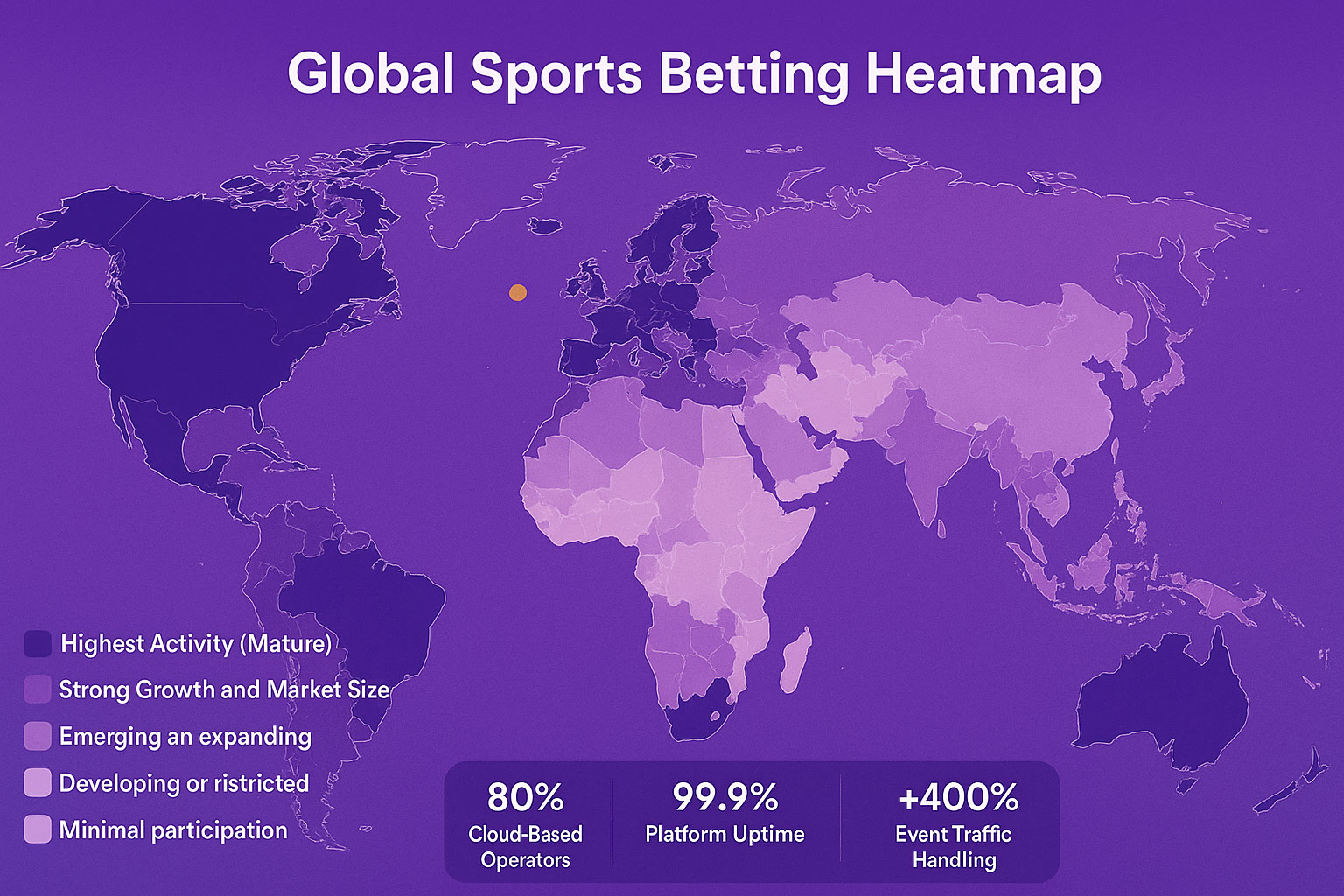
| Cloud-Based Operators | 80% | Global scalability and reduced cost |
| Platform Uptime | 99.9% | Continuous access and reliability |
| Event Traffic Handling | +400% | Seamless performance during major events |
Without elastic cloud infrastructure, even the biggest bookmakers would go offline during major tournaments.
Ethical responsibility has become a defining factor in long-term success. Modern bettors expect transparency, privacy, and safety alongside entertainment. Operators now integrate AI-driven monitoring systems to detect problem gambling, verify age and identity, and prevent manipulative marketing practices. Global regulators increasingly evaluate companies not just on compliance but on ethical performance – how they promote responsible behavior, educate users, and protect vulnerable players. Public trust and sustainable growth depend on this shift from profit-driven strategies to responsible innovation. In the long run, platforms that treat ethics as a strategic priority, not a legal obligation, are shaping the future of the industry.
Key Regulatory and Ethical Focus Areas
Artificial intelligence will move from background automation to complete ecosystem control. It will predict user behavior, tailor odds in real time, and balance operator exposure with near-perfect precision. Recommendation systems will personalize every interface, from sports preferences to wager size. Risk management algorithms will react instantly to market changes, while AI-powered responsible gambling tools will flag early signs of addictive behavior. By 2030, more than 80 percent of all betting decisions – from pricing to promotions – will involve AI input. This shift will make platforms more efficient, fair, and adaptive to user needs.
Esports and virtual sports will grow from niche categories into global leaders, driven by Gen Z and younger millennials. Their appeal lies in accessibility, constant availability, and immersive engagement through streaming and social platforms. Real-world sporting calendars will no longer define betting peaks — instead, continuous digital competitions will sustain 24/7 user activity. Major esports tournaments will introduce official betting partnerships and data rights frameworks similar to traditional sports. Virtual sports will thrive in emerging markets, offering fast, mobile-friendly betting experiences. Together, these segments are projected to represent nearly 25 percent of online betting volume by 2035.
Blockchain technology will redefine how bettors perceive trust. Smart contracts will execute wagers instantly, with provably fair algorithms ensuring transparent results. Operators using blockchain-based systems will eliminate disputes over outcomes and transactions while reducing payment delays. Cryptocurrencies will facilitate seamless cross-border betting, bypassing traditional payment restrictions and lowering operational costs. Users will have full visibility into odds, payouts, and audit trails, creating a fairer digital environment. By 2035, decentralized betting platforms will capture a significant share of emerging markets, establishing blockchain as the backbone of trust, efficiency, and transparency in global sports wagering.
Sports betting stands at the crossroads of technology, entertainment, and responsibility, evolving into one of the most dynamic sectors in the digital economy. The integration of artificial intelligence, data analytics, and cloud systems is reshaping how users interact with platforms, creating faster, safer, and more personalized experiences. Regulatory frameworks are maturing, pushing operators toward greater transparency and ethical integrity, while emerging markets bring new opportunities for global expansion. Esports, blockchain, and real time betting continue to redefine how audiences engage with sports, blending competition with continuous interaction. The next era of sports betting will reward innovation that balances excitement with accountability, where success depends not on risk but on relevance. The platforms that treat users as participants in a connected digital experience rather than mere customers will set the standard for how the industry grows, adapts, and earns lasting trust worldwide.
The leading trends include the rise of artificial intelligence for personalized odds and recommendations, the expansion of live and micro-betting, and the integration of streaming with wagering. Esports, blockchain platforms, and responsible gaming technologies are also driving growth, turning betting into a more interactive, transparent, and ethical experience.
Technology has made betting faster, safer, and more accessible. Mobile apps, real-time data feeds, and AI-powered analytics now define user engagement. Players receive customized odds, instant payouts, and improved security, while cloud systems ensure that platforms can handle millions of users without downtime during major sports events.
North America and Latin America currently show the highest growth rates due to new legalization and expanding mobile infrastructure. Asia-Pacific is emerging as a major player through esports and mobile betting, while Europe remains stable and mature with advanced regulatory systems and long-standing customer trust.
Regulations are becoming more sophisticated, focusing on consumer protection, data privacy, and ethical advertising. Operators are adopting automated KYC systems, AI-driven monitoring tools, and transparent reporting standards to comply with evolving laws. This regulatory focus encourages sustainable growth and builds credibility across global markets.
Responsible gambling will be central to the industry’s future. AI-driven behavior tracking, spending limits, and self-exclusion tools will become standard features. Governments and operators are investing in education and transparency, ensuring that betting remains a safe form of entertainment rather than a high-risk activity.


Author
Marina Kostadinova | Content Strategist