Virginia:
US:
Other Trend Topics
Live Casino Trends
Sports Betting Trends
Bonus Trends
Crypto Casino Trends
Slots started as simple machines meant to grab attention and swallow coins. Over a century later, they’ve turned into global digital playgrounds. The transformation was about how people play, where they play, and what keeps them spinning.
The first major leap came in the 1960s when electromechanical slots replaced the classic spring-and-gear design. Suddenly, developers could introduce multiple paylines and flashing lights – a taste of the visual chaos to come. Fast-forward to the 1990s, and the internet flipped the entire industry. Online casinos brought slots from smoke-filled arcades to computer screens, and that accessibility sparked exponential growth in titles, mechanics, and players.
Then came mobile gaming: the real game-changer. By the mid-2010s, slots were designed with “tap-first” logic, optimized for one-hand play and short bursts of excitement. Studios shifted focus from bulky visuals to fluid design, while features like auto-spin and quick play made slots feel tailor-made for the smartphone era. Now, the evolution has gone full tech. Artificial Intelligence, data analysis, and real-time personalization are shaping how games adapt to player preferences. Some studios even use AI to fine-tune volatility or suggest themes based on play history.
Stay in touch with players' choices for online slots with this list.
The slot industry has entered a phase of strategic innovation rather than simple iteration. What used to be a race for flashier visuals or bigger jackpots is now about how long players stay engaged, how personalized the gameplay feels, and how connected slot releases are to broader entertainment culture.
Studios are analyzing behavioral data, optimizing math models, and blending casino logic with mainstream media strategies. 2025’s slot market is worth over $60 billion globally, with online and mobile titles driving 70% of total playtime. Two dominant trends are defining this era (streaming culture and AI-driven slot design) supported by several smaller, but equally influential sub-trends.
Slot streaming started as an underground curiosity – a handful of high-stakes players broadcasting their spins for fun on Twitch around 2016–2017. Back then, the idea of watching someone gamble online felt niche, even strange. But as platforms relaxed their gambling policies and streamers began mixing slot play with commentary and community interaction, the format found its footing. By 2019, casino streaming had become one of Twitch’s fastest-growing entertainment categories. What began as informal gameplay turned into a broadcast phenomenon, complete with production value, sponsorship deals, and brand partnerships. Streamers like Roshtein, Trainwreckstv, and ClassyBeef built cult-like audiences, pulling tens of thousands of concurrent viewers during live sessions. Then Kick launched in 2023 with a gambling-friendly structure, the slot streaming boom went mainstream. Operators like Stake saw record traffic after major streamers signed exclusivity contracts. Suddenly, slots weren’t just games; they were content engines.
Traditional casino marketing relied on banners, bonus offers, and aggregator listings. Streaming flipped that script. Today, many players’ first contact with a new slot isn’t through an ad, it’s through a viral moment. A streamer hits a 10,000x multiplier on Sweet Bonanza, yells in disbelief, and within hours, that clip racks up millions of views on TikTok and YouTube Shorts.
📈 This shift has made visibility performance-based:


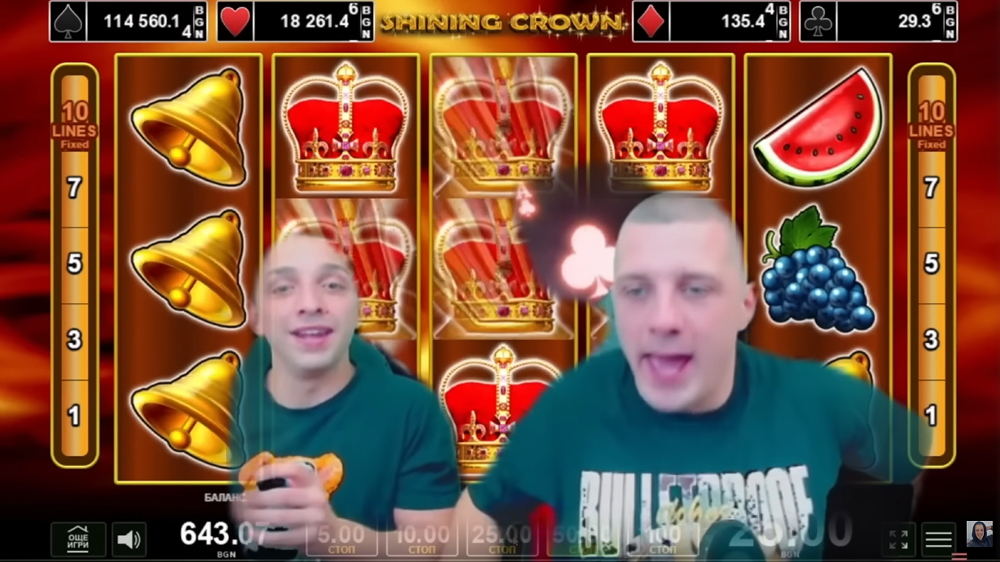
Andrey Kumbarov (right), a Bulgarian slot streamer and his friend Kristiyan Yankov (left) during a live stream on Twitch.
Pragmatic Play, Relax Gaming, and StakeLogic all admit to testing games for stream reaction. They track which features draw the loudest chat responses and adjust animations or pacing to enhance that “moment payoff.” It’s an entirely new feedback loop – a fusion of entertainment metrics and game mechanics.
| Metric | Stat (2024–2025) | Source/Context |
| Players discovering new slots via streams | 35–40% | Global Gaming Monitor 2024 |
| Average concurrent viewers for top slot streamers | 20K–50K | TwitchTracker / Kick analytics |
| Growth in “Casino” streaming category YoY | +112% (2022–2024) | StreamCharts |
| Studios publicly designing for streamability | Pragmatic Play, StakeLogic, Hacksaw Gaming, Relax Gaming | Industry releases |
| Top viral slot clips (TikTok/YouTube Shorts views) | >200M total in 2024 | Collated via SocialBlade estimates |


Roshtein
Widely rated the top casino/slot streamer; considered a pioneer in the space.


Trainwreckstv
Among the highest viewer-hours in the “Slots & Casino” category.


Vegas Matt
High subscriber counts, focuses on slots among other casino games.


Lady Luck HQ
One of the more prominent female-led slot streaming channels.


Xposed
Noted in rankings as among top slot-streaming channels.
Main Page: AI Slots
Artificial Intelligence is reshaping every step of slot creation from visual concepting to player retention. Leading developers are no longer guessing what players enjoy; they’re training algorithms to predict engagement patterns based on real gameplay data.
| Feature | Traditional Slots | AI-Powered Slots |
| Development Cycle | 6–12 months, mostly manual | 3–6 months, aided by AI asset generation |
| Game Logic | Fixed math models | Adaptive or data-informed volatility testing |
| Player Experience | Same for all players | Personalized offers, recommendations, and pacing |
| Data Usage | Basic performance analytics | Deep behavioral learning + predictive modeling |
| Regulatory Complexity | Established standards | Ongoing debates about algorithmic fairness |
Beyond streaming and AI, several underlying design and behavioral trends are shaping how modern slots are built, marketed, and sustained. These movements may seem secondary, but together, they form the operational core of today’s slot development cycle from how features are engineered to how studios interpret player psychology.


Modern slot visuals are not just decoration, they’re conversion tools. Every animation, color gradient, and frame rate choice is deliberate, built to hold attention and sustain engagement per spin. Over the last decade, slot aesthetics have gone from static symbols to high-performance visual systems that balance cinematic appeal with strict performance and compliance requirements.
In the early 2010s, slot visuals were flashy but shallow with high-contrast graphics meant to imitate arcade machines. As player expectations evolved, studios began prioritizing engineered design: visuals created to serve behavioral goals such as clarity, retention, and emotional pacing.
Studios like Elk Studios, NoLimit City, and Play’n GO now run pre-release tests that measure visual fatigue, ensuring animations stimulate without overwhelming.
Color in slots is behavioral engineering. Data from slot UX testing shows:
| Design Element | Primary Purpose | Typical Effect |
| Warm colors (red, orange, gold) | Signal reward or near-miss events | Heightens excitement, boosts spin continuation |
| Cool tones (blue, teal, violet) | Used in base gameplay or low-volatility modes | Reduces tension, increases playtime consistency |
| Motion pacing | Adjusts anticipation curve | Slower reveals = longer engagement duration |
| Particle effects | Frame wins and bonuses | Directs attention to value symbols |
Around 2018, the focus shifted to mobile-first design. Over 80% of slot spins now occur on smartphones, forcing studios to rethink how much visual complexity the human eye (and GPU) can handle on a 6-inch screen. Key mobile design trends include:
This shift means even the most graphically advanced slots are built to feel cinematic but still load in under five seconds on mobile data.
The last fifteen years reshaped the slot industry more than the previous fifty. From the dawn of HTML5 to the rise of AI-assisted production, slots evolved from simple browser games into technically advanced entertainment systems. The 2010–2025 timeline is a story of accessibility, innovation, and relentless competition where every leap in technology redefined how players spin, spend, and stay engaged.
The early 2010s marked the transition from Flash to HTML5, a technical revolution that made slots playable on any device without plug-ins. Studios that adapted early like NetEnt and Microgaming dominated the market.
Key characteristics of the era:
🎰 Defining Slots:
📊 Market Insight: By 2013, online slots accounted for 45% of total iGaming revenue, up from just 28% in 2009 thanks mainly to mobile browser compatibility and rising smartphone adoption.
Smartphones became the new slot machines. Studios began optimizing for vertical play, fast load times, and one-handed controls. Mechanics like Auto-Spin and Quick Spin were built specifically for short mobile sessions.
Trends:
🎰 Defining Slots:
🧠 Fact: By 2017, 70% of slot sessions happened on mobile, forcing developers to design for touch interfaces first, desktops second.
This period introduced mechanical creativity as the main competitive factor. Studios competed not on visuals, but on how the game played. The rise of feature buys, megaways, and progressive jackpots turned every spin into a tactical choice.
Innovation Highlights:
🎰 Defining Slots:
💡 Market Note: The number of active online slot titles surpassed 20,000 globally by 2020 – double what it was in 2015.
Slot streaming exploded on Twitch and Kick, changing marketing forever. Players were no longer convinced by banners or bonuses – they followed the entertainment. Studios began designing “streamable” games with dynamic bonuses, dramatic builds, and highly visual win reveals.
Defining Traits:
🎰 Defining Slots:
📊 Impact: By 2023, an estimated one-third of new online slot players discovered games via streaming content rather than casino platforms directly.
The newest evolution is happening behind the scenes. Artificial intelligence and procedural generation tools are reshaping how slots are developed, balanced, and marketed.
Defining Shifts:
🎰 Defining Slots:
Over the next few years, the slot industry is set to move beyond visual upgrades and bonus mechanics. The focus will shift toward adaptivity, transparency, and player agency. As technology matures, the most successful studios will build games that think better. Artificial Intelligence is already influencing the creative and mathematical sides of slot development, but by 2026, we’ll see the first truly adaptive games. These titles will analyze player interaction data in real time: adjusting volatility, pacing, or even bonus timing to keep engagement consistent. It’s a natural progression from static math models to flexible game logic. The regulatory challenge, of course, will be transparency. Players and governing bodies will demand visible safeguards ensuring AI-driven adjustments remain fair and predictable.
Blockchain will likely play a complementary role here. Beyond its early association with crypto casinos, blockchain’s real value lies in verifiable fairness and ownership. The concept of “provably fair” gaming is evolving – we could soon see slots where every spin, RTP percentage, and jackpot contribution is logged on-chain, open for audit. Some developers are already experimenting with player-owned cosmetics and digital collectibles, creating small ecosystems within casino platforms. It’s less about NFTs as hype, and more about accountability and data trust. At the same time, streaming and social integration will continue to steer how new titles are launched and marketed. Studios are beginning to treat streamers as co-developers – testing pre-release builds, offering branded versions of existing slots, and using live reactions as engagement data. Expect launch cycles that feel closer to video game premieres, complete with countdown events and exclusive early-access sessions broadcast to thousands of viewers.
On the design front, responsible gaming technology will become a central trend rather than a side note. Expect to see tools that monitor player sentiment and spending rhythm in real time, triggering subtle cooldowns or reminders when play crosses self-defined limits. As regulations tighten, casinos and developers will find that smarter protection equals longer player lifetime.
If the last decade was defined by mechanics and visual polish, the next will be defined by data fluency and player control. The future belongs to studios that treat every spin not just as a random outcome, but as a personalized interaction: transparent, intelligent, and designed to evolve with the player.
Here are our answers to the most commonly asked questions regarding slots and slot trends.
AI-driven game design, slot streaming, and feature-rich mechanics lead the market. Developers are also investing heavily in mobile optimization, ethical gaming tools, and blockchain-backed transparency.
Slots are faster to produce and easier to theme. Studios release new titles weekly to stay visible on aggregator platforms and streaming channels, keeping player interest constantly refreshed.
Land-based slots still focus on physical engagement like lights, sound, and tactile feedback. Online slots rely on data, visuals, and player analytics to shape ongoing engagement and retention.
High-volatility slots create bigger win potential and stronger emotional highs, which suit both streamers and players seeking excitement. These games perform better in viral content and on social platforms.
AI assists in creating art, sound, and animation faster while analyzing player data to refine game balance. Some studios also use AI to test volatility and optimize engagement curves.
AI slots adapt certain parameters (such as volatility or bonus frequency) based on real-time feedback. Traditional slots, by contrast, operate on fixed math models that never change.
Streaming turns big wins and bonus hits into entertainment clips. A single 10,000x win shared by a popular streamer can push a game into the spotlight overnight.
It’s made slots social. Players now watch, react, and follow streamers like they would esports creators. Developers design games that look great and build suspense for audiences, not just players.
Over 80% of spins now happen on smartphones. Mobile slots load faster, use less data, and fit modern attention spans, making them the most practical format for today’s players.


Author
Gabriela Kirilova | Content Optimization Director