





 International
  Argentina
  Australia
  Austria
  Belgium
  Brazil
  Canada
  Chile
Chile  Czechia
  Denmark
  Estonia
  Finland
  France
  Germany
  Greece
  Hungary
  India
India  Indonesia
  Ireland
  Israel
  Italy
Italy  Japan
Japan  Netherlands
  New Zealand
  Nigeria
  Norway
  Malaysia
  Mexico
  Peru
Peru  Philippines
  Poland
  Qatar
Qatar  Romania
  Russia
  Slovakia
  Slovenia
  South Africa
  South Korea
  Spain
Spain  Sweden
  Switzerland
  Thailand
  Turkey
  Vietnam
  UAE
UAE  United Kingdom
  USA
USA - Casino News
- Industry News
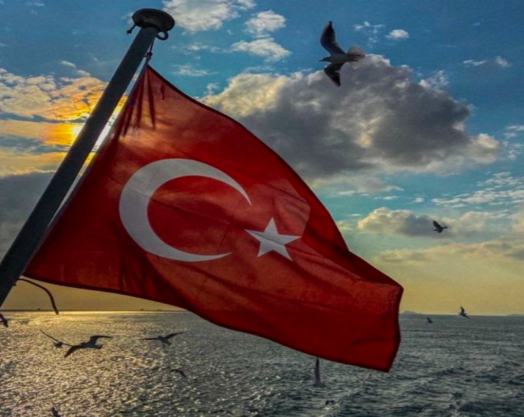
Turkey Blocks Media Accounts Linked to Gambling Promotion


Turkey Blocks Media Accounts Linked to Gambling Promotion
 The Turkish Ministry of Trade has announced a new measure targeting online content linked to illegal gambling, confirming that 30 social media accounts have been restricted following a review by the country's Advertising Board. The decision stems from findings that these accounts, including several on YouTube, had shared material allegedly encouraging participation in unlicensed betting and gambling activities.
According to the official statement, the Advertising Board determined that the content violated provisions of Turkey's Regulation on Commercial Advertising and Unfair Commercial Practices, as well as the Consumer Protection Law. Authorities stated that if the material is not removed, the accounts will be permanently closed. The action represents another step in Turkey's ongoing attempt to contain gambling-related activity within its tightly regulated market framework.
 Gambling has long been a contentious issue in Turkey. Casinos were prohibited in 1998, and by 2006, the government had extended restrictions to include non-state online gambling operations. This regulatory framework has left the state-run lottery, Milli Piyango, and a limited number of licensed betting services as the only legally sanctioned forms of gambling in the country. Despite these measures, unlicensed online gambling, often connected to offshore operators, continues to attract Turkish users, particularly around major sporting events.
Officials have sought to counter these activities through a series of enforcement initiatives, including website blocking, disrupting payment networks linked to illegal betting, and tighter monitoring of digital advertising. The latest action by the Advertising Board adds social media promotion to that list, targeting individuals and content creators who use online platforms to attract users to unregulated betting sites.
 The Ministry of Trade emphasized that the blocked accounts were found to have shared content that either directly or indirectly encouraged participation in gambling. In some instances, this involved commentary on live betting odds or subtle endorsements of online betting platforms. Authorities stated that such content, even when not explicitly advertising a product, constitutes a violation of Turkey's consumer and advertising regulations if it encourages engagement with unlicensed operators.
While the government describes these actions as part of an effort to safeguard consumers and ensure market fairness, the broader context reflects Turkey's increasing oversight of digital platforms. Over the past decade, the government has introduced multiple laws expanding its authority to monitor, restrict, or remove online content. These include obligations for social media companies to comply with removal orders, maintain local offices, and manage user data domestically.
 Critics of the policy framework argue that measures justified as consumer protection may also serve to enhance state control over online spaces. Some observers have expressed concern that the boundaries between gambling-related regulation and political oversight of digital platforms are becoming increasingly blurred. Nevertheless, Turkish regulators continue to assert that the primary motivation remains the protection of consumers from financial risk and fraudulent practices.
In its statement, the Ministry of Trade underscored that unlicensed gambling poses both financial and legal risks for users. It also noted the potential for illegal operators to engage in money laundering, data misuse, and other illicit activities. By targeting promotional content rather than only gambling operators, authorities aim to curb visibility and limit the audience reach of unregulated platforms.
The action against 30 accounts is part of a wider enforcement strategy that reflects Turkey's cautious stance toward the gambling sector. Unlike several European countries that have adopted licensing systems to regulate and tax online gambling, Turkey has maintained a prohibition-based model, restricting access to only a small number of state-approved services. This approach emphasizes central oversight rather than market liberalization.
 Despite ongoing enforcement efforts, unlicensed online betting remains resilient, largely due to the cross-border nature of digital communication. Offshore operators often utilize encrypted websites, social media influencers, and anonymous payment methods to target Turkish audiences. Regulators have responded with coordinated efforts involving not only the Advertising Board but also the Financial Crimes Investigation Board and the Banking Regulation and Supervision Agency. These bodies collaborate to monitor financial transactions and restrict payment flows associated with gambling-related activities.
The latest action highlights the shift in the scope of regulation from traditional operators to digital intermediaries. Social media, streaming platforms, and content-sharing networks have become key battlegrounds in Turkey's effort to limit exposure to unlicensed gambling. By targeting these channels, the Advertising Board aims to reduce the normalization of betting content in online discourse.
The Hottest Casinos 2025
Check out these recommended brands and start winning big today.
No results were found!