





 International
  Argentina
  Australia
  Austria
  Belgium
  Brazil
  Canada
  Chile
Chile  Czechia
  Denmark
  Estonia
  Finland
  France
  Germany
  Greece
  Hungary
  India
India  Indonesia
  Ireland
  Israel
  Italy
Italy  Japan
Japan  Netherlands
  New Zealand
  Nigeria
  Norway
  Malaysia
  Mexico
  Peru
Peru  Philippines
  Poland
  Qatar
Qatar  Romania
  Russia
  Slovakia
  Slovenia
  South Africa
  South Korea
  Spain
Spain  Sweden
  Switzerland
  Thailand
  Turkey
  Vietnam
  UAE
UAE  United Kingdom
  USA
USA - Casino News
- Industry News
Regulatory Clarity Questioned as Swedish Gambling Face Scrutiny



Regulatory Clarity Questioned as Swedish Gambling Face Scrutiny

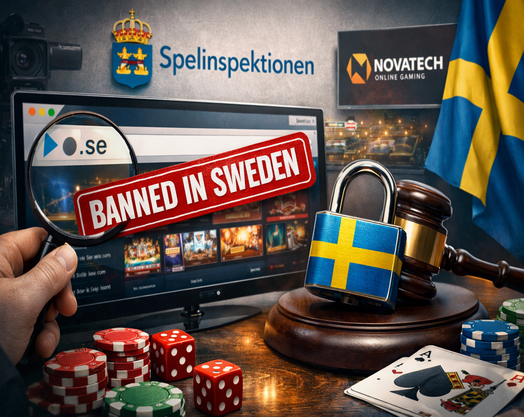
Sweden's gambling sector is once again in focus following a formal investigation initiated by the national regulator, Spelinspektionen. The inquiry targets Svenska Spel and ATG—two operators linked to the state—as well as Malta-based Lotto Direct. At issue is whether these entities fulfilled a requirement under the Swedish Gambling Act to notify the regulator about changes to licensing applications or registration details.
The Gambling Act of 2018 outlines various conditions for holding a Swedish gambling license. One clause obliges operators to report modifications that could affect their original licensing status. Spelinspektionen has not disclosed the exact nature of the changes under review or what triggered the inspection. However, the agency confirmed that outcomes, including possible penalties or adjustments to licensing terms, will be published after the investigation is completed.
The compliance check arrives at a moment when legal interpretations of Sweden's gambling regulations are being tested in court. Just days before announcing this latest review, Spelinspektionen had a fine it imposed overturned by the Administrative Court in Linköping. The SEK100 million (EUR 9.1 million) penalty had been directed at Svenska Spel Sport & Casino, citing inadequate implementation of responsible gambling measures for ten customers who experienced substantial losses in the last quarter of 2021.
 According to the regulator, Svenska Spel did not act quickly or thoroughly enough to intervene in cases of potential gambling harm. These actions were viewed as falling short of the duty of care outlined in Sweden's 2019 implementation of the Gambling Act. The operator challenged the sanction, arguing that the fine was disproportionate and that the regulatory language lacked the precision necessary to define breaches clearly.
Fredrik Wastenson, CEO of Svenska Spel Sport & Casino, commented that the vagueness in the legislation made it difficult for licensees to interpret and meet expectations. He suggested that the absence of concrete guidelines had led to enforcement based more on interpretation than established standards. The court's decision to dismiss the fine appeared to validate this concern, indicating a need for tighter legal definitions within Sweden's gambling framework.
The overlapping developments—compliance investigations on one hand and a judicial setback for the regulator on the other—raise questions about the coherence of Sweden's current regulatory structure. The licensing system introduced in 2019 aimed to bring the country's gambling market under tighter control while maintaining competitive conditions for licensed operators. However, discrepancies between regulatory expectations and court interpretations have introduced uncertainty in how rules are applied and enforced.
 Both Svenska Spel and ATG are facing financial pressure as well. In its Q1 report, ATG stated that net gaming revenue across its Swedish and Danish operations, including horse racing, sports betting, and online casino products, had declined to SEK 1.2 billion (EUR 110 million), representing an 8% decrease compared to the same period last year. The downturn was most pronounced in horse racing, where revenue fell by 10%. Svenska Spel has also reported weaker performance for the quarter, although it has not published specific figures.
The timing of the regulator's latest probe could carry both operational and legal implications for the companies involved. Financial strain may limit an operator's ability to respond swiftly to regulatory shifts or invest in internal compliance systems. Conversely, if the investigation results in licensing restrictions or a reputational impact, these businesses may face further difficulties in maintaining their market share.
 From a broader industry perspective, the developments illustrate how evolving regulation can influence both business strategy and legal risk in regulated markets. While compliance is generally expected, the tools and benchmarks used to assess it are not always transparent. This disconnect can lead to disputes not just over penalties but over the interpretation of the law itself.
Operators functioning within the Swedish system now face the challenge of aligning business operations with a framework that is still being refined. The feedback loop between regulatory enforcement and court rulings is shaping the real boundaries of what is permissible. For now, the regulatory environment remains open to legal contestation, particularly when sanctions are imposed without explicit criteria.
The latest actions by Spelinspektionen suggest a sustained effort to monitor changes in licensing conditions, even among operators already under national control. This approach indicates that no entity is exempt from the licensing rules, but it also raises questions about consistency and transparency in enforcement. If operators believe that expectations are shifting without prior notice or clear articulation, compliance may become more reactive than preventive.
Top Online Casinos
10 Recommended Online Brands On CasinoLandia That Will Enhance Your Gaming Experience
No results were found!