


 International
  Argentina
  Australia
  Austria
  Belgium
  Brazil
  Canada
  Chile
Chile  Czechia
  Denmark
  Estonia
  Finland
  France
  Germany
  Greece
  Hungary
  India
India  Indonesia
  Ireland
  Israel
  Italy
Italy  Japan
Japan  Netherlands
  New Zealand
  Nigeria
  Norway
  Malaysia
  Mexico
  Peru
Peru  Philippines
  Poland
  Qatar
Qatar  Romania
  Russia
  Slovakia
  Slovenia
  South Africa
  South Korea
  Spain
Spain  Sweden
  Switzerland
  Thailand
  Turkey
  Vietnam
  UAE
UAE  United Kingdom
  USA
USA - Casino News
- Industry News
Poland Weighs Criminal Sanctions for Gambling Promotion


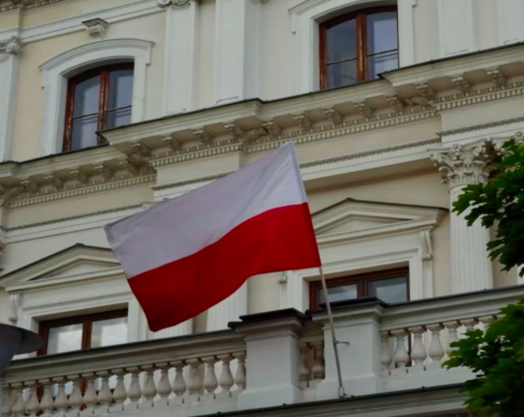
Poland Weighs Criminal Sanctions for Gambling Promotion

Poland is considering a significant shift in how it treats gambling-related content on digital platforms, as lawmakers debate proposals that would bring criminal law into areas previously regulated and enforced. A draft amendment to the Penal Code, recently submitted to Parliament, would make the promotion of online gambling by influencers and streamers a criminal offence, with penalties that include prison sentences.
The proposal is formally framed as a response to “patostreaming,” a domestic term used to describe online broadcasts that depict violence, abuse, or degrading behaviour. While the concept has been discussed in Poland for several years, the current draft takes a broader approach by extending criminal liability to other forms of content deemed harmful, including the advertising or endorsement of gambling services operating outside the country’s legal framework.
 Supporters of the initiative argue that the rise of live streaming and social media has created a regulatory gap. According to this view, activities that would clearly attract legal consequences offline can be repackaged as entertainment when transmitted online, often reaching large audiences without effective oversight. The draft law is intended to close that gap by placing online conduct on a legal footing similar to that of acts committed in physical settings.
If adopted, the amendment would introduce new offences related to the online distribution of criminal behaviour. Individuals who broadcast or share recordings of serious crimes, whether staged or real, could face prison terms ranging from three months to five years. Importantly for the gambling sector, the same sentencing range would apply to influencers who promote gambling, particularly where such promotion relates to services that are not licensed in Poland.
 Gambling regulation in the country is already among the most restrictive in Europe. Sports betting is permitted under a licensing system, but both land-based casinos and online casino games fall under a state monopoly. These activities are operated exclusively by Totalizator Sportowy, which also manages national lottery products. As a result, the majority of online casino platforms accessible to Polish users are legally unauthorised.
In recent years, authorities have increasingly focused on the role of influencers in directing traffic to these offshore platforms. The proposed criminalisation follows a series of coordinated enforcement actions involving the Ministry of Finance, the Financial Supervision Authority, and the police. These actions have included investigations and raids targeting individuals accused of promoting unlicensed casinos through platforms such as Twitch, YouTube, and Kick.
 Financial measures have accompanied these efforts. The Financial Supervision Authority has instructed payment service providers to stop processing transactions connected to illegal gambling operators. This has reportedly led to the removal of local payment options, including BLIK, from several offshore casino websites. Regulators see payment disruption as a practical way to limit access to unauthorised services, particularly when operators are based outside Poland.
The legislative initiative has the backing of the Civic Coalition government, formed by an alliance of Civic Platform, Modern, and the Polish Initiative. Ministers from the coalition have described the draft law as part of a broader attempt to modernise criminal legislation in response to digital platforms. They argue that existing tools are insufficient to address the speed and scale at which online content can spread.
A recurring theme in parliamentary discussions has been the protection of minors. Lawmakers have raised concerns about the visibility of gambling promotions and violent streams on platforms that are widely used by young audiences. In this context, influencers are seen as particularly influential, as their content often blends entertainment, personal branding, and commercial messaging in ways that are difficult to distinguish.
 The focus on gambling promotion fits into a wider regulatory agenda. In December, the government presented a separate draft amendment to the Gambling Act addressing loot boxes in video games. That proposal would introduce a new legal category for games that award virtual items at random, treating certain in-game purchases as a form of gambling. Under the draft, loot boxes would be restricted to adults, and companies offering them would need a licence and would be subject to consumer protection and reporting requirements.
Polish authorities have acknowledged the challenges associated with enforcing such rules. Many games that include loot boxes are popular among teenagers, and age verification remains difficult to implement consistently. In addition, platforms involved in case opening or skin trading often operate across borders, requiring cooperation with payment providers and hosting services to make enforcement effective.
 Taken together, the proposed Penal Code amendment and the planned changes to gambling legislation point to a more assertive stance toward gambling-related content in digital spaces. Rather than relying solely on administrative penalties or platform policies, the government appears willing to use criminal law as a deterrent, particularly where influencers are seen to profit from promoting illegal activity.
The draft law is still at an early stage and will need to pass through parliamentary debate before any provisions take effect. Its final scope may change as legislators consider practical implications and legal safeguards. However, the proposal already signals a clear direction of travel. If adopted, it would place Poland among the stricter European jurisdictions when it comes to the intersection of gambling, online promotion, and criminal liability, fundamentally altering the risk landscape for influencers operating in or targeting the Polish market.
Top Online Casinos
10 Recommended Online Brands On CasinoLandia That Will Enhance Your Gaming Experience
No results were found!