





 International
  Argentina
  Australia
  Austria
  Belgium
  Brazil
  Canada
  Chile
Chile  Czechia
  Denmark
  Estonia
  Finland
  France
  Germany
  Greece
  Hungary
  India
India  Indonesia
  Ireland
  Israel
  Italy
Italy  Japan
Japan  Netherlands
  New Zealand
  Nigeria
  Norway
  Malaysia
  Mexico
  Peru
Peru  Philippines
  Poland
  Qatar
Qatar  Romania
  Russia
  Slovakia
  Slovenia
  South Africa
  South Korea
  Spain
Spain  Sweden
  Switzerland
  Thailand
  Turkey
  Vietnam
  UAE
UAE  United Kingdom
  USA
USA - Casino News
- Industry News
Norway Redefines Its Charity Lottery Landscape


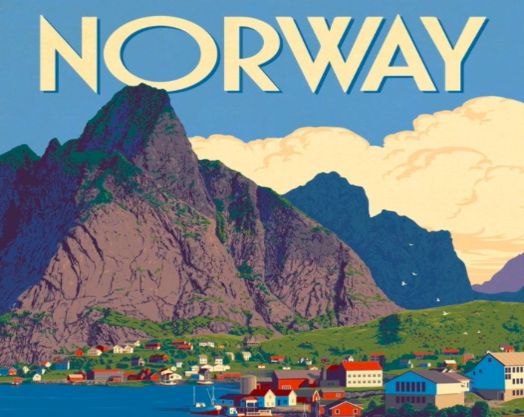
Norway Redefines Its Charity Lottery Landscape
Norway’s gambling regulator, Lottstift, has confirmed a new licensing framework for two of the country’s best-known charity lotteries, extending their operating permissions well into the next decade. Pantelotteriet and the Postcode Lottery have both been granted renewed licences, effective from 1 March and valid until 28 February 2035, marking a nine-year continuation of their activities under updated regulatory terms.
While the decision ensures long-term continuity for both lotteries, it also introduces a notable adjustment in how charitable beneficiaries are organised, particularly within the Postcode Lottery scheme. The renewed licences reflect Lottstift’s intention to preserve established models while refining their structure to align with current regulatory priorities.
 Under the new terms, licensed lottery operations will be subject to an annual turnover cap of NOK 410 m, equivalent to approximately US$ 40.7m. This limit will be adjusted annually in line with the consumer price index, allowing the ceiling to evolve gradually alongside broader economic conditions. The cap reinforces Norway’s cautious approach to gambling growth, ensuring that charitable lotteries remain within defined financial boundaries.
The most significant structural change introduced in this licensing period concerns the Postcode Lottery. Previously, the scheme operated with two licensed beneficiary organisations. Under the renewed framework, that number has increased to 23 organisations, all operating collectively under a single licence. This expansion does not increase the number of lottery licences issued but rather broadens the group of organisations eligible to receive funding through the same operational structure.
 Among the organisations included are SOS Children’s Villages, WWF, Save the Children, Norwegian Church Aid, and Norwegian People’s Aid. Together, they represent a wide range of humanitarian, environmental, and social initiatives. By consolidating these organisations under one licence, Lottstift has opted for a model that simplifies regulatory oversight while allowing proceeds to be distributed across a broader segment of civil society.
Pantelotteriet, by contrast, continues under a more focused arrangement. A single licence has been granted with the Norwegian Red Cross designated as the sole beneficiary. This outcome maintains continuity with the lottery’s long-standing structure and reflects its close institutional link with the Red Cross’s domestic and international activities.
 Tore Bell, deputy director general at Lottstift, noted that the expanded Postcode Lottery structure represents a departure from previous licensing rounds, even though the number of licences granted remains unchanged. He explained that only the Postcode Lottery, Pantelotteriet, and their affiliated organisations applied for licences for the new period. As a result, the regulator issued two licences in total: one for Pantelotteriet and one for the Postcode Lottery’s expanded network of organisations.
Despite differences in organisational scope, both lotteries operate according to similar financial distribution principles. In each case, 50 per cent of net proceeds, calculated after prize payouts, are allocated to charitable causes. For Pantelotteriet, these funds are directed entirely to the Norwegian Red Cross. For the Postcode Lottery, the same proportion is shared among the 23 participating organisations, with the remainder covering operational costs.
 This distribution model reflects Norway’s broader regulatory philosophy, which positions licensed lotteries primarily as fundraising mechanisms rather than commercial ventures. By fixing both the turnover ceiling and the share of proceeds allocated to beneficiaries, Lottstift aims to ensure that gambling activity remains proportionate and that its social purpose remains clearly defined.
Pantelotteriet occupies a distinctive role within this framework due to its integration with Norway’s recycling infrastructure. The lottery is embedded in the country’s bottle and can return system, allowing consumers to choose whether to reclaim their deposit as cash or convert it into lottery entries. This approach links environmental behaviour with charitable funding and distinguishes Pantelotteriet from more conventional lottery formats.
 The Postcode Lottery operates on a different model, based on subscriptions tied to residential postcodes. Prizes are distributed within defined geographic areas, creating a collective participation model that contrasts with individual ticket purchases. The structure has proven adaptable, allowing multiple organisations to benefit from the same lottery platform without altering the underlying format.
By extending both licences through 2035, Lottstift has provided a long planning horizon for the organisations involved. The nine-year term reduces uncertainty and limits the need for frequent licence renewals, while ongoing regulatory oversight is maintained through financial reporting requirements and turnover restrictions.
Best Online Casinos
10 Recommended Online Brands On CasinoLandia That Will Enhance Your Gaming Experience
No results were found!