






 International
  Argentina
  Australia
  Austria
  Belgium
  Brazil
  Canada
  Chile
Chile  Czechia
  Denmark
  Estonia
  Finland
  France
  Germany
  Greece
  Hungary
  India
India  Indonesia
  Ireland
  Israel
  Italy
Italy  Japan
Japan  Netherlands
  New Zealand
  Nigeria
  Norway
  Malaysia
  Mexico
  Peru
Peru  Philippines
  Poland
  Qatar
Qatar  Romania
  Russia
  Slovakia
  Slovenia
  South Africa
  South Korea
  Spain
Spain  Sweden
  Switzerland
  Thailand
  Turkey
  Vietnam
  UAE
UAE  United Kingdom
  USA
USA - Casino News
- Industry News
Montenegro Revises Gambling Winnings Tax


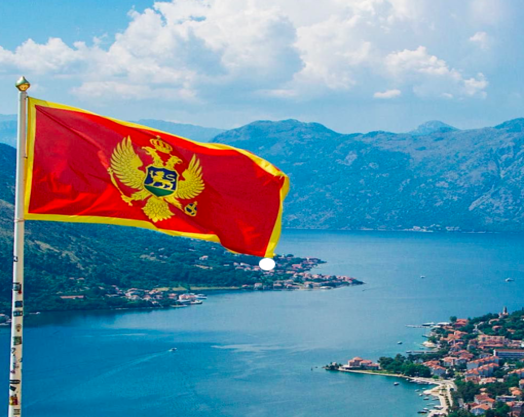
Montenegro Revises Gambling Winnings Tax
Montenegro has entered the new year with a revised tax framework for gambling winnings, introducing changes that have quickly become a focal point of debate between the government and the gambling industry. While the Ministry of Finance has framed the reform as a corrective measure, operators and industry groups argue that its introduction has created uncertainty and raised broader questions about the regulatory process and consistency.
The new tax rules were enacted through amendments to the Law on Personal Income Tax and took effect at the start of the year. Unlike many fiscal measures, the changes were not presented as part of Montenegro's 2026 Budget, a decision that has drawn attention in itself. Operators report that they were given only 24 hours' notice to adjust technical and financial systems before the new framework came into force, a timeline that many describe as unrealistic in a highly regulated sector.
 Under the previous regime, gambling winnings above €300 were subject to a flat 15 percent tax. The revised system replaces this with a tiered structure. Winnings up to €50 are now exempt from taxation. Amounts between €50.01 and €1,500 are taxed at 10 percent, while winnings exceeding €1,500 face a 15 percent levy. The rules apply to betting, lottery products, and international jackpots, but do not extend to casino and slot machine winnings.
It is this selective scope that has become one of the most contested aspects of the reform. The Ministry of Finance has stated that the earlier flat-rate model did not produce the desired fiscal results and that a more nuanced approach was required. However, industry representatives argue that no detailed fiscal assessment has been made public to explain why the new thresholds were chosen or how excluding certain gambling verticals aligns with the stated objectives.
 Armen Šehović, a member of parliament from the Europe Now Movement, proposed the amendments. While legislative proposals often attract debate, the speed of implementation has intensified scrutiny. Operators say the absence of consultation limited their ability to assess operational impact or provide feedback before the rules became binding. In a sector where compliance relies on system configuration and reporting accuracy, sudden regulatory shifts can carry material consequences.
MontenegroBet, the national online gambling association, has emerged as the most vocal critic of the reform. The group has filed a formal complaint and announced plans to challenge the amendments before the Constitutional Court. Its concerns extend beyond taxation levels to what it views as unequal treatment across the gambling market. By excluding casino and slot machine winnings, MontenegroBet argues that the law departs from the principle of uniform application.
 In its public statements, the association has questioned whether all operators were placed on equal footing when the changes were introduced. Some market participants may have had advance knowledge of the reform, allowing them to prepare their systems before the deadline. While these claims have not been independently verified, they reflect a broader industry perception that the reform's impact is uneven.
According to MontenegroBet, official assurances that the law would be applied without exceptions do not align with its practical effect. The association argues that exempting certain forms of gambling revenue effectively shields specific business models from taxation, while others bear the full weight of the reform. From its perspective, this raises not only economic concerns but also constitutional ones.
 This dispute is part of a longer pattern of tension between the gambling sector and policymakers in Montenegro. In 2024, MontenegroBet actively opposed a proposed ban on the use of digital wallets for online gambling transactions. That proposal was later withdrawn, reinforcing the association's role as a consistent participant in regulatory discussions. The current situation suggests that dialogue between the industry and government remains unresolved.
The tax controversy also unfolds alongside wider regulatory reform. In August, Montenegro enacted new gambling legislation aimed at modernising oversight and aligning national rules more closely with European Union standards. The law introduced changes to licensing requirements, financial monitoring, customer verification, and advertising rules. The government presented these measures as part of a broader effort to clarify responsibilities and reduce regulatory gaps.
 In December, calls for a constitutional review of the new gambling law were rejected, signalling the government's confidence in its legal framework. Prime Minister Milojko Spajić has repeatedly stated that authorities intend to eliminate what he describes as “grey areas” in gambling regulation. From the government's perspective, firmer rules and enforcement are necessary to ensure compliance and fiscal discipline.
For operators, however, the issue is not resistance to reform in principle but concern over predictability and process. Regulatory stability, they argue, depends not only on clear legal texts but also on reasonable implementation timelines and transparent justification. The separation of the tax amendments from the budget process, combined with the lack of published analysis, has contributed to uncertainty about how future changes may be introduced.
Top Online Casinos On Our Land
10 Renowned Online Casinos On CasinoLandia That Will Cater For Your Casino Needs
No results were found!