





 International
  Argentina
  Australia
  Austria
  Belgium
  Brazil
  Canada
  Chile
Chile  Czechia
  Denmark
  Estonia
  Finland
  France
  Germany
  Greece
  Hungary
  India
India  Indonesia
  Ireland
  Israel
  Italy
Italy  Japan
Japan  Netherlands
  New Zealand
  Nigeria
  Norway
  Malaysia
  Mexico
  Peru
Peru  Philippines
  Poland
  Qatar
Qatar  Romania
  Russia
  Slovakia
  Slovenia
  South Africa
  South Korea
  Spain
Spain  Sweden
  Switzerland
  Thailand
  Turkey
  Vietnam
  UAE
UAE  United Kingdom
  USA
USA - Casino News
- Industry News
German Betting Association Warns of Expanding Black Market


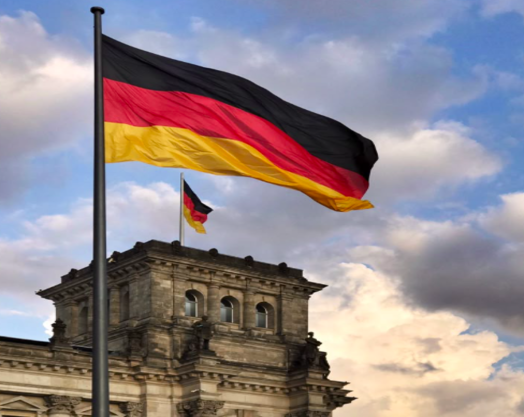
German Betting Association Warns of Expanding Black Market
 The start of the UEFA Champions League season has brought renewed attention to Germany’s sports betting market, but the headlines extend beyond the matches themselves. The German Sports Betting Association (DSWV) has raised concerns about the growing dominance of unlicensed operators, warning that the imbalance between legal and illegal betting platforms could place both consumers and regulators under pressure.
According to figures provided by the Joint Gambling Authority of the federal states (GGL), 34 websites currently hold licences to operate legally in Germany. Against them stand at least 382 German-language sites offering sports betting without approval. The ratio, eleven to one in favor of the black market, underscores the scale of the challenge facing regulators.
 Mathias Dahms, President of the DSWV, argued that this imbalance does not just disadvantage licensed operators but also undermines protections designed to safeguard consumers. Licensed companies are required to guarantee payouts, set limits on deposits, and contribute tax revenue that supports public services. By contrast, operators without licences are not subject to oversight and, as a result, do not offer the same safeguards.
The warning has been timed to coincide with the Champions League, which generates the second-highest volume of betting in Germany after the Bundesliga. The surge in activity during the competition creates opportunities for unlicensed operators to capture new customers, often by presenting themselves as legitimate platforms. For consumers, the distinction between legal and illegal operators can be difficult to draw, particularly when unlicensed sites advertise aggressively online.
 The association emphasised that participation in unlicensed betting is not simply a matter of personal risk but carries legal consequences. German law makes unauthorized gambling a punishable offence, with penalties ranging from fines to potential prison sentences of up to six months. Despite this, many bettors remain unaware of the legal status of the sites they use, highlighting the gap in public understanding.
There is also a broader public health dimension. Licensed operators in Germany contribute to prevention programmes, counselling services, and initiatives run by the Federal Institute of Public Health. This funding supports free and anonymous help lines, as well as online resources aimed at addressing gambling-related risks. Illegal platforms contribute nothing to such efforts, leaving the burden of prevention and treatment with public institutions.
 Dahms noted that one way to strengthen the regulated sector is through visibility. Licensed operators are permitted to advertise on stadium perimeter boards and during televised matches, and the association views this as an important means of reminding consumers which companies are legally authorised. Without this visibility, unlicensed platforms, which face no restrictions, may gain greater traction during high-profile tournaments.
Another indicator of legitimacy is the regulator’s allowlist, an official record of approved companies maintained by the GGL. While the list is publicly available, not all consumers are aware of it, and many bettors rely instead on online search results or recommendations from forums and social media. This creates a situation in which illegal operators can appear alongside licensed companies, making it difficult for individuals to distinguish between the two.
 The DSWV has long argued that reducing the size of the black market requires cooperation between regulators, operators, and consumers. From the association’s perspective, only a robust and visible legal market can push back against the unlicensed sector. That means ensuring not only that regulation is strict, but also that legal operators are accessible and recognised by consumers.
The data published by the GGL raises broader questions about the effectiveness of Germany’s regulatory framework since the Interstate Treaty on Gambling was introduced. The treaty aimed to create a unified legal structure, strengthen consumer protections, and channel activity into the regulated market. However, the large number of illegal websites available in German shows that implementation has not yet produced the desired balance.
The timing of this warning is significant. The Champions League season generates enormous attention, both on and off the pitch, and with it comes heightened betting activity. For regulators and the licensed sector, the weeks ahead are not only about managing increased demand but also about preventing unlicensed operators from consolidating their presence.
Top Online Casinos
10 Recommended Online Brands On CasinoLandia That Will Enhance Your Gaming Experience
No results were found!