






 International
  Argentina
  Australia
  Austria
  Belgium
  Brazil
  Canada
  Chile
Chile  Czechia
  Denmark
  Estonia
  Finland
  France
  Germany
  Greece
  Hungary
  India
India  Indonesia
  Ireland
  Israel
  Italy
Italy  Japan
Japan  Netherlands
  New Zealand
  Nigeria
  Norway
  Malaysia
  Mexico
  Peru
Peru  Philippines
  Poland
  Qatar
Qatar  Romania
  Russia
  Slovakia
  Slovenia
  South Africa
  South Korea
  Spain
Spain  Sweden
  Switzerland
  Thailand
  Turkey
  Vietnam
  UAE
UAE  United Kingdom
  USA
USA - Casino News
- Industry News
Gambling Ads Return to the Centre of Ireland’s Political Debate


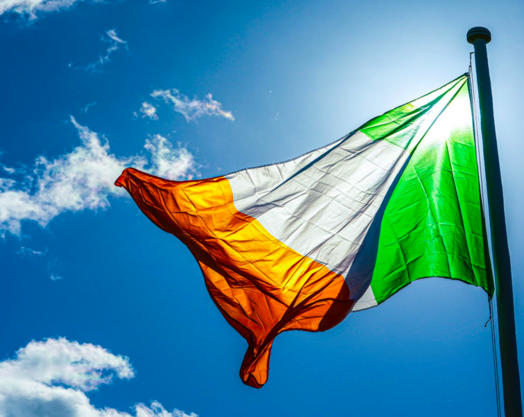
Gambling Ads Return to the Centre of Ireland’s Political Debate
Discussion around gambling advertising in Ireland has regained momentum following comments from Ivana Bacik, leader of the Irish Labour Party, who has publicly supported the introduction of a complete ban on gambling advertisements. Her remarks suggest a renewed political focus on whether existing restrictions are sufficient to address the social risks linked to gambling promotion, particularly for those vulnerable to addiction.
Speaking in a recent media interview, Bacik confirmed that Labour supports a prohibition similar to those adopted in several European countries. In pointing to policy developments elsewhere, she framed the issue as one of alignment rather than innovation, arguing that Ireland is now lagging behind jurisdictions that have opted for more comprehensive advertising controls. The position marks a clear step beyond Labour’s previous criticism of advertising practices, placing the party firmly in favour of a full ban.
 At the centre of Bacik’s argument is the relationship between advertising and gambling-related harm. She has stated that promotional activity can intensify existing problems by targeting individuals already at risk. From Labour’s perspective, advertising is not a neutral commercial tool but a factor that can reinforce harmful behaviour patterns. This view underpins the party’s support for removing gambling promotion entirely from public spaces and media channels.
The comments were partly prompted by a recent retail promotion by BoyleSports in Dublin, which drew attention for emphasising cash deposits and withdrawals without a bank account. While the operator has stressed that the promotion complies with current regulatory requirements, including verification procedures for online accounts, the campaign sparked criticism among some lawmakers. For Bacik, the episode illustrated what she sees as a broader issue: marketing strategies that may appeal to individuals seeking to bypass financial controls.
 This incident has added fuel to an already active debate around the scope of Ireland’s gambling legislation. The Irish Gambling Regulation Act, enacted last year, represented the most significant overhaul of gambling law in the country for decades. However, despite its breadth, the legislation did not introduce a complete advertising ban. Instead, it imposed a watershed rule that prevents gambling advertisements from appearing on broadcast media between 5.30am and 9.00pm.
At the time, the watershed was presented as a compromise, intended to reduce exposure during hours when children and vulnerable audiences are more likely to be watching or listening. Critics, including members of the Labour Party, argued that this approach addressed timing rather than volume, leaving gambling advertising highly visible outside restricted hours. Bacik’s recent statements indicate that Labour believes this compromise has not resolved the underlying concerns.
 The absence of a full advertising ban has remained a point of contention among policymakers. Some lawmakers argue that advertising restrictions should be reassessed once the broader regulatory framework is fully operational. Others, including Labour, suggest that delaying further action risks normalising gambling promotion in everyday life, undermining efforts to reduce harm.
Complicating the debate is the fact that Ireland’s regulatory system is still in transition. The Gambling Regulation Act established the Gambling Regulatory Authority of Ireland, a new body tasked with overseeing the sector. While the authority has been formally created, it is still building capacity ahead of the launch of a new licensing regime for online gambling, expected in 2026.
 In preparation for this role, the regulator published its Statement of Strategy covering the period from 2025 to 2027. The document outlines priorities, including consumer protection, effective enforcement, and the development of a sustainable funding model. The authority has indicated that it aims to become self-financing within two years, relying on fees paid by licensed operators rather than ongoing state funding.
 Although the strategy highlights harm prevention as a core objective, it does not propose an outright ban on gambling advertising. This reflects the limits of the regulator’s remit, as any move toward a full prohibition would require legislative change rather than regulatory adjustment. As a result, responsibility for revisiting advertising policy rests with lawmakers rather than the regulator itself.
Bacik’s intervention, therefore, places renewed pressure on the political system to clarify its long-term stance. By drawing comparisons with other European countries, Labour is positioning the issue as one of political will rather than technical feasibility. The question is not whether a ban can be implemented, but whether there is sufficient consensus to pursue it.
Top Online Casinos On Our Land
10 Recommended Online Brands On CasinoLandia That Will Enhance Your Gaming Experience
No results were found!