





 International
  Argentina
  Australia
  Austria
  Belgium
  Brazil
  Canada
  Chile
Chile  Czechia
  Denmark
  Estonia
  Finland
  France
  Germany
  Greece
  Hungary
  India
India  Indonesia
  Ireland
  Israel
  Italy
Italy  Japan
Japan  Netherlands
  New Zealand
  Nigeria
  Norway
  Malaysia
  Mexico
  Peru
Peru  Philippines
  Poland
  Qatar
Qatar  Romania
  Russia
  Slovakia
  Slovenia
  South Africa
  South Korea
  Spain
Spain  Sweden
  Switzerland
  Thailand
  Turkey
  Vietnam
  UAE
UAE  United Kingdom
  USA
USA - Casino News
- Industry News
Draft Reform in Poland To Result in Taxation of Gambling Winnings


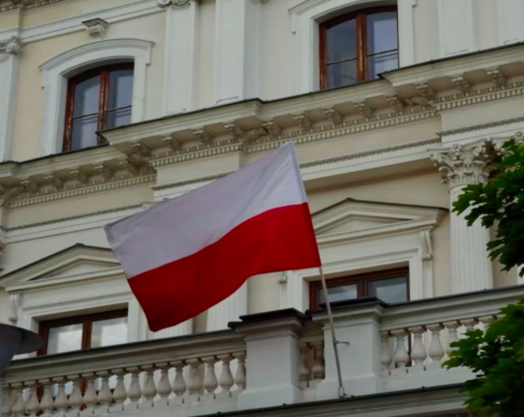
Draft Reform in Poland To Result in Taxation of Gambling Winnings
 Poland’s Ministry of Finance has set out plans to reshape how gambling winnings are taxed, introducing a rate increase and extending the reach of existing rules to include income earned beyond national borders. If the proposal moves ahead in its current form, it would adjust a framework that has remained unchanged for more than two decades and bring offshore winnings within the same tax scope as domestic payouts.
The government intends to raise the withholding rate on gambling winnings from 10 to 15 per cent starting in January 2026. The proposed change would apply to the full range of legal gambling formats available to residents, from lotteries and betting to casino play. Alongside the rate increase, the reform would also require Polish taxpayers to declare and pay taxes on winnings from operators based outside the country, including those located elsewhere in the European Union. This would place foreign-sourced gambling income under the Personal Income Tax Act and align it with domestic obligations.
 Officials have explained the initiative as a response to an industry that has outgrown the framework created in 2001, when online gambling was far less prominent and the number of international operators targeting Polish players was limited. In its announcement, the ministry cited market expansion and diversification as reasons to revisit the system, rather than relying on a structure designed for a different landscape. The ministry has also framed the change as a means of shaping consumer behaviour while securing higher state revenue, describing the reform as both fiscal and regulatory in intent.
A final draft is expected by the end of the year, after internal consultations. Parliamentary debate would follow before any enforcement. The timeline allows for adjustments, particularly regarding enforcement mechanisms for foreign-based payouts.
 Poland already operates one of the stricter tax models in Europe. Sports betting is taxed on stakes at a rate of 12 per cent rather than on operator profits, a system that has drawn criticism for its effect on margins. Slot machines and table games face a 50% tax on net revenue. For individual players, the current 10 per cent withholding applies to winnings that exceed the exemption threshold, which stands at €520. That threshold may be revised or removed under the upcoming reform, though the ministry has not yet signalled its position.
The broadened reach of the tax raises immediate questions around compliance. Licensed domestic operators automatically withhold taxes before paying out winnings. Still, the same approach cannot be assumed for offshore platforms that do not hold Polish licences or report to domestic authorities. The ministry has not explained how it intends to collect tax from winnings paid out by companies based in other jurisdictions, particularly those that do not cooperate with Polish regulators or operate under different legal regimes.
 Legal observers note that enforcement mechanisms will determine whether the policy has practical effect or remains largely symbolic. Monitoring offshore winnings may require additional reporting duties for players or cooperation agreements with international operators, neither of which have been clarified. Some analysts also suggest the proposal could prompt debate at the EU level if it is seen as indirectly disadvantaging foreign operators.
Industry representatives have already begun to raise concerns about the potential market response. A higher withholding rate may push more players toward unregulated platforms that do not apply Polish tax rules. If regulated operators become less attractive because of increased deductions, a segment of the market may migrate to websites without oversight. That outcome would run counter to the stated goal of improving compliance and protecting public revenue, and could further complicate enforcement efforts.
 Others argue that expanding the tax to include offshore winnings could narrow gaps in the current structure. At present, players using foreign platforms may escape tax obligations altogether. The government views the reform as a means to mitigate this imbalance and apply a uniform approach to all winnings. Supporters suggest that, if implemented with workable enforcement tools, the adjustment could improve consistency and limit avoidance.
There is still uncertainty over how the exemption threshold for small winnings will be handled. Removing or lowering the current €520 allowance would widen the pool of taxable income but could also increase administrative burdens. Retaining the threshold, on the other hand, might temper criticism while reducing potential revenue gains. The decision on this detail will shape both public reaction and industry adaptation.
 The reform is also being read in the context of broader fiscal policy, as the government looks for ways to increase revenue without introducing entirely new taxes. Gambling income presents an established category tied to individual payouts and operator reporting, making it an easier target for adjustment than less structured sectors. Policymakers have indicated that the objective is not only to raise public funds but to update a system that no longer reflects contemporary patterns of play.
As the legislative draft is prepared, operators, legal experts, and player groups will be watching for specifics on reporting obligations, cross-border enforcement measures, and any transitional provisions. Much of the reaction will depend on how these elements are written into the bill. Once released, the proposal will move into the legislative process, where parliamentary committees may refine, narrow, or expand the scope.
Top Online Casinos
10 Recommended Online Brands On CasinoLandia That Will Enhance Your Gaming Experience
No results were found!