





 International
  Argentina
  Australia
  Austria
  Belgium
  Brazil
  Canada
  Chile
Chile  Czechia
  Denmark
  Estonia
  Finland
  France
  Germany
  Greece
  Hungary
  India
India  Indonesia
  Ireland
  Israel
  Italy
Italy  Japan
Japan  Netherlands
  New Zealand
  Nigeria
  Norway
  Malaysia
  Mexico
  Peru
Peru  Philippines
  Poland
  Qatar
Qatar  Romania
  Russia
  Slovakia
  Slovenia
  South Africa
  South Korea
  Spain
Spain  Sweden
  Switzerland
  Thailand
  Turkey
  Vietnam
  UAE
UAE  United Kingdom
  USA
USA - Casino News
- Industry News
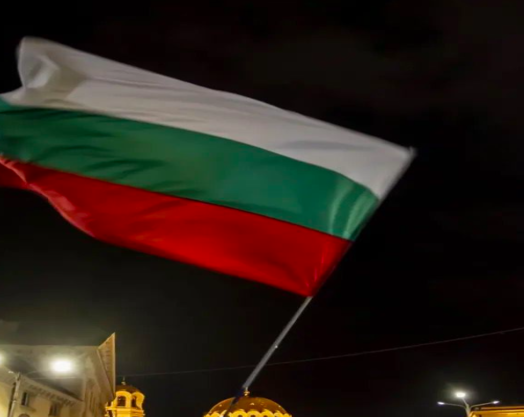
Bulgarian Parliament Rejects State-Controlled Gambling Plan


Bulgarian Parliament Rejects State-Controlled Gambling Plan

The long-running conversation about how Bulgaria should organise and supervise its gambling sector resurfaced in Parliament, where lawmakers rejected a proposal that would have shifted the entire market under direct state control. The measure was introduced by Mech MP Hristo Rastashki and received backing from the far-right Vazrazhdane, yet it failed to gather sufficient support. Only 58 deputies voted in favour, while the rest either opposed it or abstained, signalling that the idea had not gained meaningful traction.
The proposal attempted to reposition the state as the sole operator of all gambling activities. Supporters framed the initiative as a corrective measure designed to address gaps in enforcement and to create a more consistent framework for protecting individuals who are more likely to be affected by gambling-related issues. They argued that a single state-run structure could apply rules more uniformly and respond more directly when concerns arise over advertising practices or the presence of gambling signage. For its advocates, the current landscape reflects uneven enforcement that could be resolved only through full state oversight.
 Opposition voices shaped the debate, offering a different perspective on the consequences of market consolidation. Several lawmakers argued that transferring full authority and operational control to the state might weaken a segment of the tourism economy that depends on gambling-related activity. Visitors from countries such as Israel and Iran have been an important part of certain regions' tourism flow, and opponents suggested that a state-controlled system might reduce the attractiveness of Bulgaria's casino and betting venues for those travellers.
Concerns about the budgetary impact also influenced the discussion. Critics projected that a state monopoly might reduce annual tax intake by about €200m, a shortfall that would place additional pressure on the public finances. Opponents claimed that private operators have historically demonstrated higher efficiency in attracting users and generating tax revenue, and that removing competition could reduce innovation and responsiveness to market preferences. They also warned that narrowing the choice of regulated services could make it easier for illegal operators to attract users, potentially complicating future attempts to improve compliance.
 The debate did not unfold in isolation. Days earlier, members of the ruling majority introduced a different proposal that moves in the opposite direction. Their draft legislation outlines a concession model that would privatise the operations currently managed by the Bulgarian Sports Totalizator (BST), which has held a monopoly on lottery and sports betting since 2020. The measure proposes opening BST's activities to a long-term concession to attract private operators capable of managing national lottery and sports betting products on behalf of the state.
This contrast between nationalisation and privatisation exposed a deeper divide in how political groups view the future of the country's gambling sector. One side views state operation as a tool that could strengthen regulatory oversight. The other sees private involvement as a necessary adjustment following several years in which the BST did not meet expectations under monopoly conditions.
 Supporters of the concession model point to data suggesting low channeling to the state-run platform since 2020. Revenue projections were repeatedly missed, despite the BST being the only legal provider of certain gambling products. This trend has been central to arguments that a private operator, working under a concession agreement with firm regulatory obligations, might reverse the stagnation. Proponents emphasise that the state would retain control over the rules, while a concessionaire would handle day-to-day operations more flexibly.
 Under the proposed procedure, Bulgaria would initiate a public call for concession bids by March 31, 2026. Candidates must be companies registered in Bulgaria or foreign firms with a physical presence in the country. The concession term would run for no fewer than fifteen years, giving the selected operator a sufficiently long period to structure its business plans and fulfil any revenue or compliance obligations imposed by the contract.
If adopted, the concession model would mark another shift in Bulgaria's approach to gambling oversight, which has already undergone several adjustments over the past decade. Each change has reflected different political priorities and shifting public attitudes, leaving the sector in a state of periodic reorganisation. The current debate suggests that clarity on long-term policy direction remains elusive, and additional discussions are likely before lawmakers settle on a stable framework.
Top Online Casinos
10 Recommended Online Brands On CasinoLandia That Will Enhance Your Gaming Experience
No results were found!