





 International
  Argentina
  Australia
  Austria
  Belgium
  Brazil
  Canada
  Chile
Chile  Czechia
  Denmark
  Estonia
  Finland
  France
  Germany
  Greece
  Hungary
  India
India  Indonesia
  Ireland
  Israel
  Italy
Italy  Japan
Japan  Netherlands
  New Zealand
  Nigeria
  Norway
  Malaysia
  Mexico
  Peru
Peru  Philippines
  Poland
  Qatar
Qatar  Romania
  Russia
  Slovakia
  Slovenia
  South Africa
  South Korea
  Spain
Spain  Sweden
  Switzerland
  Thailand
  Turkey
  Vietnam
  UAE
UAE  United Kingdom
  USA
USA - Casino News
- Crypto
- Industry News
- Sports Betting
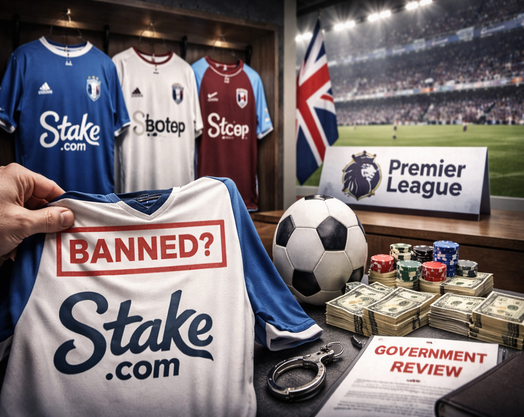
UK Seeks Stronger Rules on Football Sponsorship


UK Seeks Stronger Rules on Football Sponsorship
The intersection of professional football and gambling in the United Kingdom is once again under scrutiny. Premier League clubs have agreed to remove betting logos from the front of matchday shirts at the end of this season. Yet, the question of how far unlicensed operators can continue to associate themselves with the sport remains unresolved. The UK government has now launched a consultation on whether such companies should be barred entirely from sponsoring top-tier football teams. This move could reshape the landscape of football commercial partnerships.
Several Premier League clubs, including Everton, Fulham, and Burnley, have featured logos of online casinos and bookmakers that do not hold a Gambling Commission licence. While these firms operate legally in other jurisdictions, they are not authorised to offer services to UK customers. Under current voluntary measures, clubs have committed to ending front-of-shirt sponsorships with gambling operators. Still, sleeve sponsorships and other commercial tie-ups remain possible, leaving an opening for unlicensed operators to maintain visibility.
 The consultation comes after a series of controversies involving some overseas-facing gambling companies. Officials have cited issues ranging from breaches of anti-money laundering standards to links with problematic marketing practices and, in some cases, concerns about organised crime. The government argues that sponsorships by operators outside domestic regulation carry potential risks to vulnerable individuals and raise questions about accountability in the promotion of gambling.
One of the most notable cases involves Everton’s partnership with Stake.com, reportedly valued at £10 million per year. Stake’s relationship with the club has been controversial for several reasons. While it held a UK licence in 2022, investigations found that it accepted cryptocurrency payments on its platform, a method prohibited under domestic rules. Promotions linked to the club, including high-stakes free bet offers, drew attention from both regulators and the club itself, leading to the suspension of certain marketing campaigns.
 Stake ultimately relinquished its British licence following scrutiny over social media promotions. Despite this, the company continues to sponsor Everton, asserting that it does not target UK consumers. This situation illustrates the complexity of sponsorship arrangements that operate across borders, particularly in a digital environment where brands’ reach can extend globally while their licensing status remains jurisdiction-specific.
The involvement of white-label providers has further complicated the sponsorship environment. Companies such as TGP Europe enabled operators to access UK sponsorship opportunities through intermediary licences. Several Premier League deals, including those with Fulham (Sbotop) and Burnley (96.com), were facilitated through this model. Earlier this year, TGP Europe exited the British market following a £3.3 million fine from the Gambling Commission for deficiencies in due diligence and anti-money laundering practices, effectively removing the licensing gateway for several operators.
 With TGP’s exit, a number of these operators no longer hold any licences allowing them to operate in Great Britain. The government’s proposed ban on unlicensed sponsorship would close loopholes that currently allow such firms to engage in sleeve deals or other commercial agreements, extending the principle of the front-of-shirt ban to all areas of visibility on club property.
The move raises broader questions about the role of football clubs in balancing commercial revenue with regulatory expectations. Sponsorship deals represent a significant source of income, especially for clubs outside the financial top tier. At the same time, ministers argue that partnerships should reflect domestic compliance standards, ensuring that the profile of high-visibility sports does not lend legitimacy to operators that fall outside the jurisdiction of UK regulators.
The consultation process will gather input from clubs, licensing authorities, consumer groups, and industry representatives. Its outcome could reshape the terms under which operators, particularly those with international licences, can align their brands with English football. While the front-of-shirt ban marks the first stage of voluntary adjustment by clubs, a statutory prohibition on unlicensed operators would formalise rules and eliminate the remaining commercial avenues open to such companies.
 This development highlights a persistent tension in UK gambling policy: reconciling the economic benefits of sponsorship revenue with the need for regulatory oversight and consumer protection. Premier League football, with its global audience, offers unparalleled exposure. For policymakers, ensuring that this visibility is linked only to operators subject to domestic standards is central to mitigating potential risks associated with unregulated gambling promotion.
In practice, clubs will need to evaluate the profile and licensing status of all current and prospective commercial partners. Operators without British licensing may no longer have opportunities to secure brand placement on club kits, in stadium advertising, or through ancillary partnerships. For football governance and regulators, the consultation represents an attempt to create consistency between voluntary industry measures and statutory rules.
Top Online Casinos On Our Land
10 Recommended Online Brands On CasinoLandia That Will Enhance Your Gaming Experience
No results were found!