





 International
  Argentina
  Australia
  Austria
  Belgium
  Brazil
  Canada
  Chile
Chile  Czechia
  Denmark
  Estonia
  Finland
  France
  Germany
  Greece
  Hungary
  India
India  Indonesia
  Ireland
  Israel
  Italy
Italy  Japan
Japan  Netherlands
  New Zealand
  Nigeria
  Norway
  Malaysia
  Mexico
  Peru
Peru  Philippines
  Poland
  Qatar
Qatar  Romania
  Russia
  Slovakia
  Slovenia
  South Africa
  South Korea
  Spain
Spain  Sweden
  Switzerland
  Thailand
  Turkey
  Vietnam
  UAE
UAE  United Kingdom
  USA
USA - Casino News
- Crypto
- Industry News
Youth Sector Adapts to Digital Risk with NYA–YGAM Training Plan


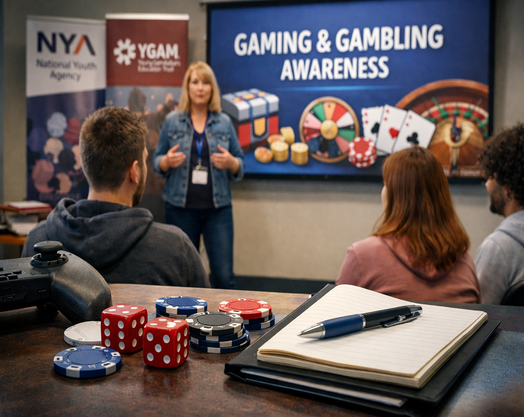
Youth Sector Adapts to Digital Risk with NYA–YGAM Training Plan

In youth centres across England and Wales, conversations about online life have become routine. Discussions that once focused on social media now extend to in-game purchases, streamed content, and digital currencies. Within this shifting landscape, the National Youth Agency has announced a partnership with the Young Gamers and Gamblers Education Trust to strengthen how youth workers understand and address gambling-related harm.
The agreement will see YGAM’s specialist training incorporated into the NYA’s national digital learning programmes. As the statutory body responsible for supporting youth work standards and training in England and Wales, the NYA operates at the centre of the sector’s professional framework. By embedding gambling harm awareness into its existing structures, the agency is positioning the issue as part of mainstream safeguarding practice rather than as a peripheral concern.
 The collaboration emerges against a backdrop of increasing scrutiny over the relationship between gaming and gambling mechanics. Chance-based features such as loot boxes have become common in many video games. While regulated differently from gambling products, these systems introduce elements of paid randomness that have drawn attention from policymakers and child protection groups. Critics argue that such features can familiarise young users with spending tied to uncertain outcomes.
Data from the Gambling Commission contributes to the broader context. The regulator reports that 59 per cent of young people have engaged in some form of gambling activity. Within that group, 30 per cent spent their own money on gambling in the past year. The figures do not distinguish between traditional gambling products and other activities, but they reinforce concerns about early exposure and accessibility.
 Additional insight comes from research commissioned by YGAM through Mumsnet. According to the findings, boys aged 15 to 17 spend an average of 34 hours per week gaming. Two-thirds of parents surveyed expressed concern about the potential for problematic patterns of behaviour. Although time spent gaming does not equate to harm, the data underscores how central digital play has become in adolescent life.
Within this environment, youth workers often serve as informal first responders. They are positioned between families, schools, and community networks, frequently engaging young people in open-ended discussions about daily routines. Yet many professionals have reported feeling underprepared when conversations shift toward in-game spending or gambling-related themes.
 The NYA–YGAM initiative seeks to address that gap. The training programme is designed to build confidence in discussing digital habits, risk awareness, and safer online conduct. Rather than framing gaming as inherently negative, the material is expected to focus on critical understanding – how monetisation works, how probability influences reward systems, and how spending decisions can escalate without clear limits.
Bex Pink, National Digital Innovation Lead at the NYA, has pointed to the pace of change in online environments. Digital platforms evolve quickly, and youth workers must adapt alongside them. Integrating specialist knowledge into national training pathways is intended to provide consistent guidance across the workforce.
For YGAM, the partnership expands its educational reach into statutory youth services. The charity has developed resources focused on prevention and early intervention, often delivered in schools and community settings. By collaborating with the NYA, its content will now sit within a broader professional development framework, potentially influencing how safeguarding is approached at scale.
 The programme’s structure suggests a practical orientation. Youth workers will not be expected to become gambling specialists. Instead, they will receive tools to recognise warning signs, initiate conversations, and signpost additional support where necessary. This aligns with a preventative model that emphasises dialogue rather than reaction.
 The initiative also reflects a wider policy conversation in the United Kingdom. As digital economies expand, traditional regulatory categories can struggle to capture hybrid models that blend entertainment and monetisation. While legislative reform remains under debate, frontline professionals must navigate the present reality. Training becomes one of the few immediate mechanisms for strengthening resilience within communities.
Importantly, the partnership frames young people as active participants rather than passive recipients of risk. Discussions around digital literacy increasingly focus on empowering individuals to understand systems that shape their choices. By equipping youth workers with clearer explanations of how gambling-style mechanics operate, the programme may encourage more informed decision-making among adolescents.
Top Online Casinos On Our Land
10 Recommended Online Brands On CasinoLandia That Will Enhance Your Gaming Experience
No results were found!